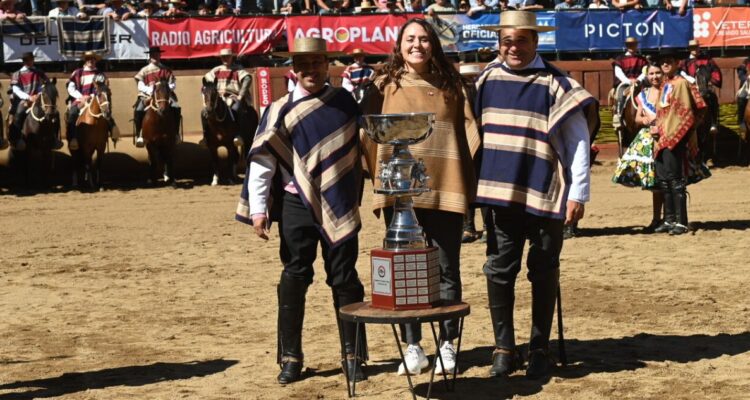
The head of the Sports Ministry participated in the closing of the 77th National Championship alongside President José Antonio Kast, where she called for the modernization of the activity under technical standards. During the closing of the 77th National Rodeo Championship at the Medialuna Monumental in Rancagua, Sports Minister Natalia Duco reaffirmed the Executive's commitment to this discipline. Accompanied by President José Antonio Kast, the minister described the practice as a "national sport," highlighting its ability to attract participants and its deep roots in Chilean identity.
During the event, popularly known as the "Champion," the authority urged the Chilean Rodeo Federation to establish a joint work agenda to professionalize and regulate the activity. Minister Duco emphasized the importance of designing a roadmap that delves into the technical and regulatory aspects of the discipline. "The invitation is for us to meet, start working together, and develop concrete initiatives," the authority stated, underscoring that few sports achieve the level of popular support that rodeo demonstrates in the regions.
Although rodeo was granted the title of national sport in 1962 by the National Sports Council, currently, the game of rayuela is the only discipline legally recognized under that status through Law No. 20. 777.
However, the institutional support generated an immediate reaction from civil society sectors. Organizations like Animal Libre harshly criticized the Government's stance, accusing it of politically validating animal suffering. Mauricio Serrano Palma, founder of the organization, challenged the authorities to withdraw support for a practice they consider abusive.
"Torture is not a sport," various users expressed on digital platforms, highlighting a deep divide in public opinion regarding the continuation of these traditions. Despite the criticism, the Ministry of Sports is projecting a development plan that allows rodeo to access better standards of competition and welfare. The debate remains open in a context where the preservation of Chilean rural traditions collides with new ethical sensitivities regarding animal treatment.
For now, the Government maintains its firm roadmap, betting on strengthening the network of medialunas and promoting the activity as an intangible cultural heritage of the country.