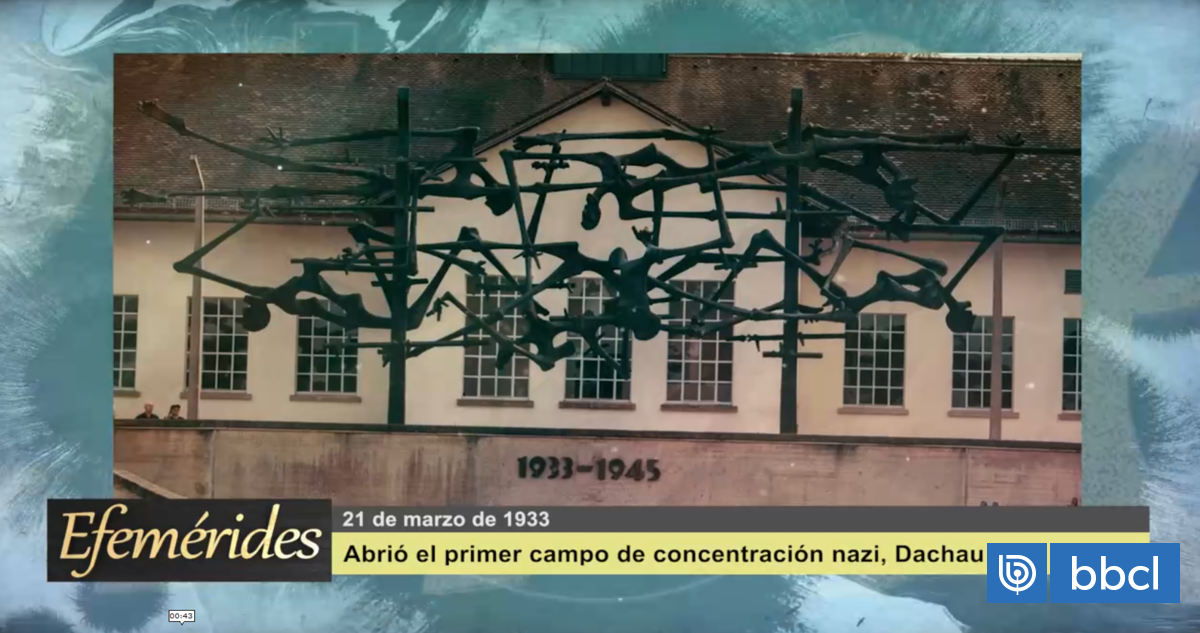
On March 21, 1933, the first Nazi concentration camp, Dachau, opened its doors, becoming the model for all subsequent camps. The site where horror began was organized and designed by Theodor Eicke, who was also its first commander and later the chief inspector of all camps. Dachau also served as a training center for guards of other facilities.
Located in an old munitions factory near the town of Dachau, about 16 kilometers from Munich, the camp housed around 4,800 prisoners in its first year, a number that increased to 13,000 by 1937. Initially, the detainees were political opponents such as communists and social democrats, but later included Jehovah's Witnesses, Roma, homosexuals, and common criminals. The camp was divided between the barracks area and the crematorium zone, featuring infrastructure such as a kitchen, laundry, workshops, and a security system with electrified fences and watchtowers.
The facility included 32 barracks, including spaces for clergy and medical experiments. In 1942, the crematorium area was built with a gas chamber, for which there is no evidence of use for killings. Prisoners deemed unable to work were sent to Hartheim Castle in Linz, where the Aktion T4 program was implemented.
Medical experiments on altitude, malaria, tuberculosis, hypothermia, and drug testing were also conducted at Dachau, along with trials for purifying seawater. By 1944, more than 30 satellite camps were created under its administration, where over 30,000 prisoners worked in armament production. On April 26, 1945, there were 67,665 registered prisoners in Dachau and its subcamps.
Four days later, the camp was liberated, and nearby troops found more than 30 train cars filled with decomposing bodies, marking the end of the first Nazi concentration camp. In this video, Nibaldo Mosciatti recounts the story of this episode that marked the world.