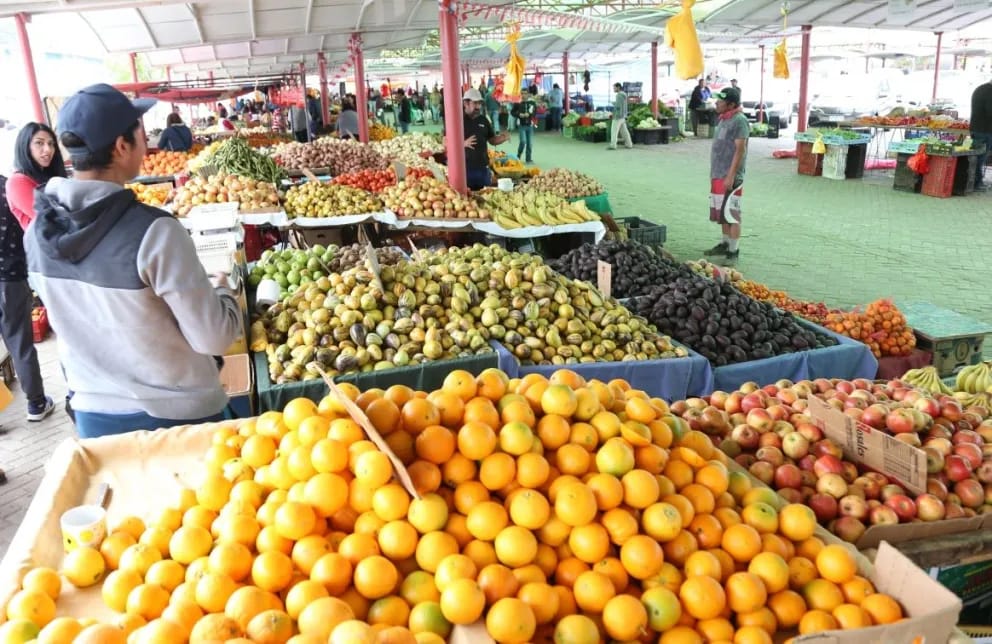
A complex economic scenario is projected for the Coquimbo Region and the country following the announcement of a historic increase in fuel prices in March 2026. Economists explained that the price adjustment will not only impact family budgets but will also have effects on inflation, the cost of food, and access to housing, among other goods and services. On Monday, the Ministry of Finance confirmed a significant increase in the price of gasoline and diesel nationwide, with an increase ranging from $370 to $580 per liter.
Estimates suggest that this situation could raise inflation by between 1. 3% and 1. 5% during April and May, while industry groups are already beginning to project which products will be most affected by these increases.
In this context, Pablo Pinto, rector of the Santo Tomás University, explained that “in Chile, approximately two-thirds (66%) of the total energy consumption of the country comes from fossil fuels. ” He added, “The historic increase in fuel prices announced for March 2026 represents a critical challenge for the Coquimbo Region, affecting both family budgets and local productive pillars. With projected increases of up to $370 per liter for gasoline and $580 for diesel, the impact manifests in several key dimensions.
” Regarding the impact on the cost of living and the basic basket of goods, he indicated that “the increase in diesel directly raises the cost of land freight. Given that Coquimbo relies on road transport for its supplies, an increase in the prices of fruits, vegetables, and groceries in local markets and supermarkets is anticipated. ” Additionally, concerning the accumulated impact on the Consumer Price Index (CPI), he stated that the increase in fuel prices is expected to add nearly one percentage point (1%) to total inflation between March and April.
“Projections place the CPI for March 2026 at around 0. 6% monthly, where approximately 0. 2 percentage points are direct…
He also pointed out that “this will create pressure on the CPI for April. It is warned that the strongest effect could be seen in that month, with a monthly CPI that could exceed 1%, pushing the value of the Unidad de Fomento (UF) up by about $400, which affects those with mortgage loans or those seeking to access housing. ” “In addition to the direct impact, an increase of between 5% and 10% in the prices of food and the basic basket is projected, due to the high logistical dependence on land transport in Chile,” he added.
In this regard, it is estimated that the CPI for April could increase by about 1%, raising the UF to around $40,240, surpassing the $40,000 barrier. Domino Effect For his part, Jonathan Hermosilla, vice-dean of the Faculty of Economics, Government, and Communications at the Central University of the Coquimbo Region, explained that “first, the increase in fuel prices will directly affect people who regularly use their vehicles for transportation. Secondly, it will impact through the rise in goods and services that directly or indirectly use fuel in their production processes.
” He also indicated that “prices will increase due to the higher transportation costs of goods and products, as well as the fuel itself and its distribution, especially in regions far from the refinery plants.