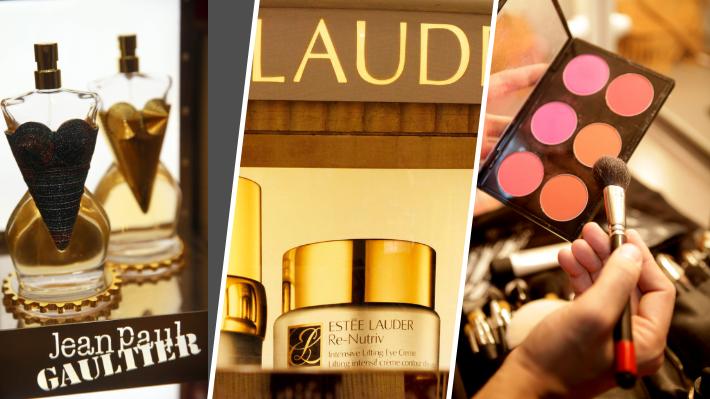
Every so often, there are major corporate movements that reconfigure entire industries. Well, what was reported in the last week of March in the beauty world could undoubtedly be one of them. Specifically, the American company Estée Lauder confirmed that it is in talks with the Spanish firm Puig for a potential business combination that would create a group with nearly $20 billion in annual sales, directly challenging L’Oréal's dominance.
According to Bloomberg, both companies acknowledged that a process is underway, although they did not detail terms or conditions. If realized, the operation would allow Estée Lauder to incorporate brands such as Carolina Herrera, Jean Paul Gaultier, and Rabanne, particularly strengthening its presence in fragrances, one of the most dynamic market categories, according to experts. Thus, the potential merger responds to a logic of complementarity.
While the American firm has a solid position in skincare and premium makeup, Puig brings leadership in fragrances and a closer connection to the fashion world, a category in which Estée Lauder hardly participates. The combination would allow for portfolio balancing, income diversification, and reduced geographical dependencies. According to analysts, this would create an ideal giant to take on the number one: L’Oréal.
Two giants with the same problem: L'Oréal Estée Lauder is one of the great dynasties of American luxury. Founded by Josephine Esther Mentzer and her husband, Joseph Lauder, after World War II, it grew through acquisitions to build a portfolio of about two dozen brands. Among them are globally recognized names such as Clinique, La Mer, Jo Malone, Mac, Bobbi Brown, Aveda, and Tom Ford.
However, its numbers tell a story of recent difficulties. The firm closed fiscal year 2025 with net sales of $14. 326 b…
The company has experienced three consecutive years of declining sales. It's not that the business is collapsing—the gross margin improved to 74%—but Estée Lauder is undergoing a deep restructuring under the leadership of its new CEO, Stéphane de la Faverie, who took over just over a year ago. De la Faverie closed the fiscal year as expected and stated that he continues to execute the strategic vision "Beauty Reimagined," with signs of momentum and confidence in resuming organic sales growth in 2026 after three years of decline.
Puig, on the other hand, is a completely different story: that of a Catalan family business that has been building "olfactory" empires for over a century. Based in L'Hospitalet de Llobregat, Puig employs more than 11,000 people worldwide and has seven factories, six in Europe and one in India. Under its umbrella are brands such as Carolina Herrera, Jean Paul Gaultier, Rabanne, Nina Ricci, Dries Van Noten, and Charlotte Tilbury.
It also owns niche brands like Byredo and L'Artisan Parfumeur. In 2025, Puig reported sales of $5. 798 billion, with a growth of 7.
8%, where three of its fragrance brands are among the ten best-selling in the world. In contrast, L'Oréal maintains a dominant position in the industry. The French firm reported sales of $50.
660 billion in 2025, with a growth of 4%, achieving advances in all its divisions and regions, in addition to operating margins above 20%. Its model combines global scale, category diversification—from mass consumption to luxury—and strong investment in innovation, digitalization, and strategic acquisitions. Following the announcement, the stock markets responded immediately.
Puig's shares surged by up to 17% during Tuesday's session in Madrid, marking its largest historical increase. Estée Lauder's shares, on the other hand, fell by 7. 4%.
The market applauded the recipient of the offer and punished the payer: a classic pattern when investors doubt that the buyer is in a position to take on such a challenge. For now, the specific details of the agreement remain confidential. Both companies have only confirmed that they are in discussions about a "possible business combination," with no final decision made yet.
It is only known that, if realized, the agreement would finally allow them to compete with the French L'Oréal.