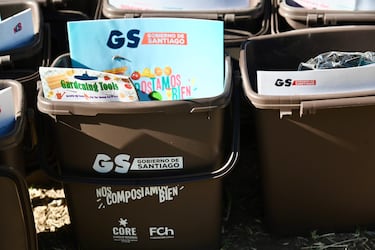
An initiative that aims to "transform waste into a useful resource for nature. " With these words, the governor of Santiago, Claudio Orrego, explained the objective of the new composting program launched by the Regional Government (Gore). This is the project "Nos Compostamos Bien II," which seeks to change the way people manage their organic waste by promoting community composting in the Metropolitan Region.
Governor Orrego explained that the program involves working with 600 organizations and 200 educational institutions in the region. They will be provided with "composting kits, tools, and training for their proper use. " "What we seek is clear: that thousands of people transform their waste into a useful resource for nature and their communities," Orrego stated.
In detail, the initiative will include awareness campaigns, educational materials, and training activities to strengthen citizen participation and "promote a more conscious culture regarding waste. " Regarding the benefits of composting, the project leader and co-founder of Geociclos, Andrea Arriagada, explained that it will allow "the reduction of waste going to landfills, the generation of compost, fertilizer that contributes to soil fertility, the strengthening of social fabric through community work, and environmental awareness and education in educational and territorial communities. " "Programs like this are a concrete step towards the environmental sustainability of the region," she asserted.
The first stage of the program has already begun. A total of 7,000 composting kits were delivered to families in the 52 municipalities of the RM. According to Gore, the process included technical support, training, and monitoring by specialized monitors.
Based on the follow-up, Gore revealed that "the emission of more than 2,700 tons of CO₂ equivalent per year was avoided, contributing to the reduction of greenhouse gases associated with waste management. " They also highlighted that "the experience demonstrated a real change in people's habits. According to the program's follow-up, participating households estimated a reduction of nearly 38% in domestic waste generation.
" According to the agency's data, currently, only about 1% of this waste is valued, despite the fact that it can be transformed into compost and returned to the natural cycle. In this sense, they emphasized that "promoting its recycling has become a key action in the face of climate change.