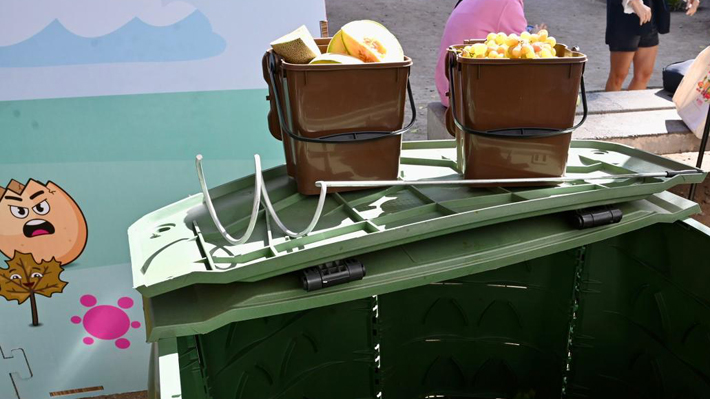
In the first stage of the initiative, 7,000 composting kits were delivered to families in the 52 communes of the region, allowing thousands of families to manage the organic waste they generate daily in a different way. The process included technical support, training, and monitoring by specialized monitors, which helped families adopt this new habit. "Thanks to this practice, it is estimated that 4,400 tons of organic waste per year did not end up in landfills, transforming into 728 tons of compost or humus, a natural fertilizer that can improve soils and green areas," highlighted the regional government.
The impact is also reflected in the climate. "We saw that the execution of stage 1 prevented the emission of more than 2,700 tons of CO2 equivalent per year, contributing to the reduction of greenhouse gases associated with waste management," they added. "In addition to the environmental benefit, the experience demonstrated a real change in people's habits.
According to the program's follow-up, participating households estimated a reduction of nearly 38% in domestic waste generation," the metropolitan regional government complemented. They also reminded that composting appears as a concrete response to the growing waste problem. "In Chile, organic waste represents a significant part of household garbage.
However, currently only about 1% of this waste is valued, despite the fact that it can be transformed into compost and returned to the natural cycle. When this waste ends up in landfills, it generates methane, a highly polluting greenhouse gas. Therefore, promoting its recycling has become a key action in the face of climate change.