In many leaders, virtue and vice inhabit the same space; they are part of a dominant trait that takes one form or another depending on the circumstances. For example, those inclined towards agreements may represent the virtue of unity or the vice of complacency in different situations. In these few weeks of government, President Kast has shown that this trait may be his sense of mission, a patriotic type whose goal is to restore a sense of responsibility in the country.
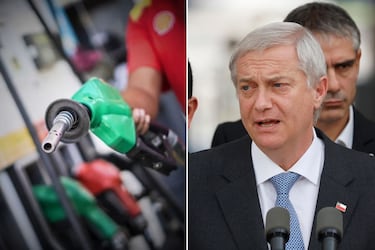
Most of his decisions seem to pay little attention to political calculations or popularity estimates. He is fully aware of these consequences but subordinates them to what he believes should resonate as duty. This can help explain his decision to allow the historic rise in fuel prices, as well as his idea to strengthen the collection mechanisms of the CAE or the dismissal—now on hold—of a service director undergoing cancer treatment.
In the president's logic, both the economic or management factor and the principle implicit in each of these cases weigh heavily: it would not be responsible to enjoy subsidies that cannot be financed, for someone to fail to meet their financial obligations, or for an official to retain their position for reasons other than merit. This principle, which runs through several of his most notable decisions, portrays him as someone unwilling to relativize his position regarding what he believes is right. If the president is to remain on this path (he has stated that he will not "go back"), he will need to draw early lessons that transform this trait into a virtue, starting by avoiding the vice that accompanies it, which is rigidity.
In this sense, for example, he should think twice before promoting an initiative like "Chao Préstamo," which would complicate his relationship with a center-right that, until now, has placed a low price on its loyalty. It would be a mistake to confuse duty with a stubborn attempt to implement his entire program. This leads to isolation, a reckless gamble that usually ends in something akin to political condemnation.
Above all, he must not become a bearer of bad news. The shock therapy of Milei, someone whom Kast observes, was undoubtedly risky, but the Argentine president bet that citizens would trust upon seeing something concrete, such as the significant drops in inflation. It is one thing to be willing to bear the cost of unpopular measures; it is another to convince oneself that this role is his destiny.
Any announcement of measures that alter people's lives or threaten to portray him as insensitive to their suffering should consider extensive contextual communication (ex ante) and a significant dose of realistic hope (ex post), which would improve the likelihood that society aligns with his sense of responsibility, a trait that appears to be the foundation of his mission. By Rafael Sousa, partner at ICC Crisis, professor at the Faculty of Communication and Letters UDP.