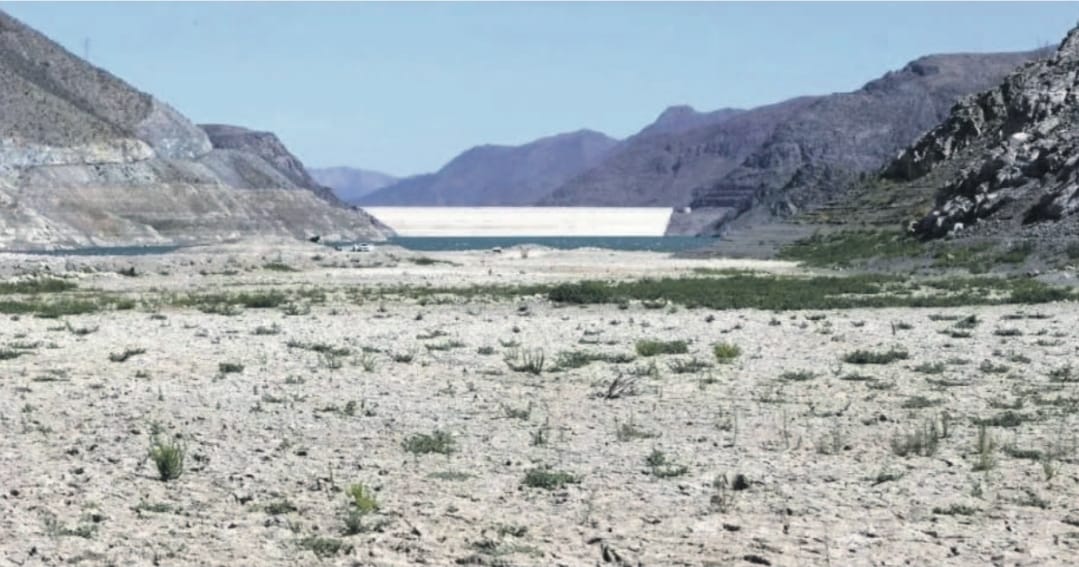
According to authorities, short-term solutions involve the construction of a series of wells in the Elqui and Limarí provinces, as they are the most affected by the lack of this vital resource. The year 2026 is anticipated to be fraught with problems for our region, a situation that paradoxically coincides with the commemoration of World Water Day established by the UN on March 22, which carries the theme "Where water flows, equality grows. " This topic calls for special reflection on the particular situation facing the region, as May could be a critical month for the Elqui and Limarí provinces regarding water scarcity if there are no intervening rains.
This is indicated by the reservoir levels in Limarí, which currently average between 6% and 15% of their maximum capacity. In this context, regional authorities have rushed to make arrangements at the central level to secure resources for preventive actions in capturing new water sources to address urgent needs in the short term through the construction of new wells. Regional councilor Francisco Corral, president of the Water and Hydric Resources Commission of the Regional Council, stated that in a meeting with the Minister of Public Works, Martín Arrau, along with Governor Cristóbal Juliá and the mediation of the regional presidential delegate, Víctor Pino, they presented the region's needs and the urgencies in this matter.
"The water situation in the Coquimbo Region is serious and critical. We hope that our region will be considered among the vulnerable and risky regions that the State currently has. This is evidenced, for example, by the capacity of our reservoirs, especially in the Elqui and Limarí provinces.
The average reservoir levels in Elqui and Limarí are around 6% to 15%, which is essentially nothing. In fact, Limarí, in particular, runs the risk of not having adequate and sufficient rains during this season; this could mean that in May, that province could run out of water for agriculture," the councilor stated. If this occurs, he assures, "priority will be given to human consumption, because according to the current Water Code, human consumption has priority.
Therefore, when reservoirs reach critical levels, as is the case with Paloma and Recoleta, the diversion to human consum…
The Coquimbo Region must be a national priority," the councilor affirmed. Regarding this, he indicated that Minister Arrau is aware of the relevant works, not only in the hydric area but also in connectivity and the challenges presented by the metropolitan area of La Serena-Coquimbo, acknowledging that these are projects that must continue and that the government will make every effort to ensure this. "We hope that, with the information provided, along with what we can work on in the region with the presidential delegate and the next Minister of Public Works, Minister Arrau can evaluate this information more thoroughly and thus highlight this emergency we have discussed.
We have confidence and hope that everything we have reported, along with what we can do with regional authorities representing the national government, will allow our region to be a priority, emergency, and urgent region, leading to a Water Emergency Plan," he argued. Water Emergency Plan Precisely, Corral indicated that it is clear that the water emergency facing the region does not involve the construction of a desalination plant, as it does not solve the problem; it may mitigate it and provide security for human consumption in La Serena and Coquimbo, he said, but to address the needs of both provinces as a whole, it is necessary to have an Emergency Plan with short- and medium-term measures. He argued that the El Panul desalination plant could be ready by 2030, but the issue is how to address the urgency before that date.
In this framework of solutions, the Water and Hydric Resources Commission of the Regional Council has set up a working group with the river monitoring boards of Limarí and Elqui, as they are the most critical provinces.