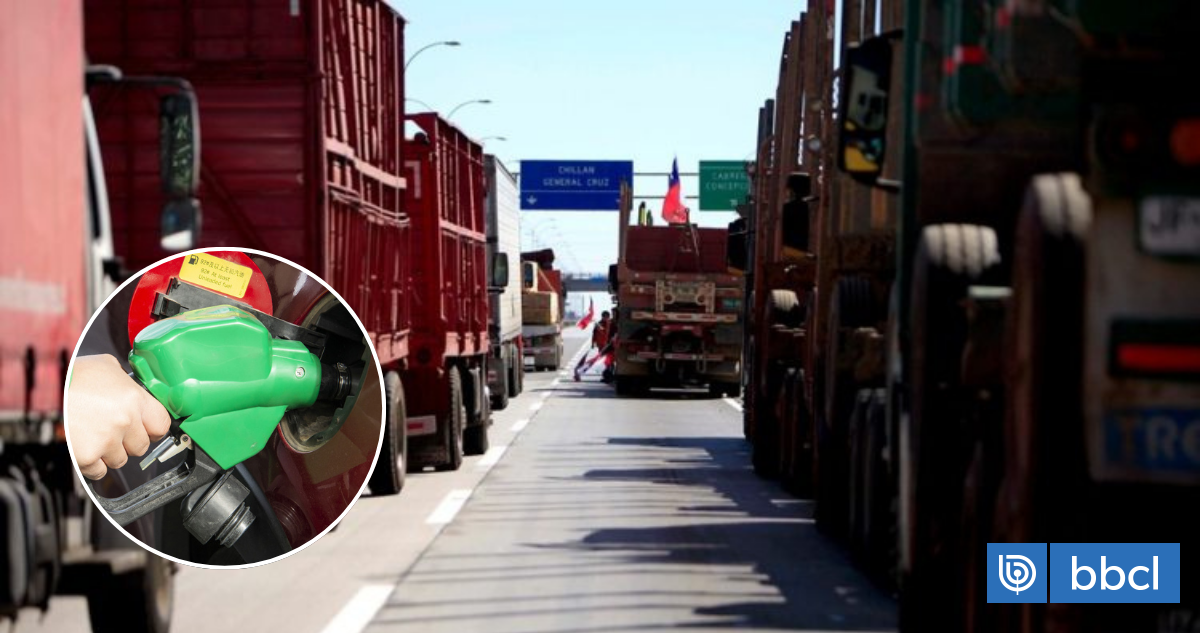
The National Confederation of Truck Owners of Chile (CNDC) rejected the government's decision on Monday to increase the price of gasoline, specifically by $580 for diesel fuel. In a statement shared with BioBioChile, the union lamented that "the enormous economic and social impact this will have has not been considered. " They stated, "Despite having warned the authorities and advised gradual increases, we were not heard.
" While the group expressed understanding of "the international and internal situation of the country, the war in the Middle East, and the weakness of the fiscal budget," they made it clear to the public: "This increase will affect consumers and the logistics chain in general, because 98% of what is consumed, produced, exported, and imported in Chile is transported by trucks, and it will hit the logistics chain hard. " "This will be particularly noticeable for transporters, especially the smaller ones, who will be very vulnerable in providing their services effectively," they detailed. "With this increase of $580 per liter, all users of diesel fuel, buses, school vans, private vehicles, company transport, agricultural tractors, in addition to trucks, will see an increase of over 60% compared to the current price," they asserted.
"The higher cost on the logistics chain, that is, all the links between the initial producer and the final consumer, we estimate to be between 20 and 25%. This will have a corresponding inflationary impact," they stated. In light of this scenario, "consequently, and given the direct threat to the price system of the general economy, this union informs that it is entering a stage of reflection on the situation, with the aim of understanding the impact it will have in different regions and evaluating the actions to follow," concluded the CNDC.
In an interview this evening with CNN Chile, Finance Minister Jorge Quiroz argued that the reason for this situation is due to "a war that has effects on the oil market like we haven't seen since the 1970s. " "It is probably one of the largest shocks to the global oil market that we have seen... we are facing a historic crisis," he assured.
In his view, this situation finds the country "in a historically tight economic situation, inherited from past administrations, particularly the one that just ended. " When asked if there would be a reversal in case of a drop in polls or protests, the minister replied: "I have said it before. I hope the country understands us, understands the situation we inherited, a historically fragile situation.