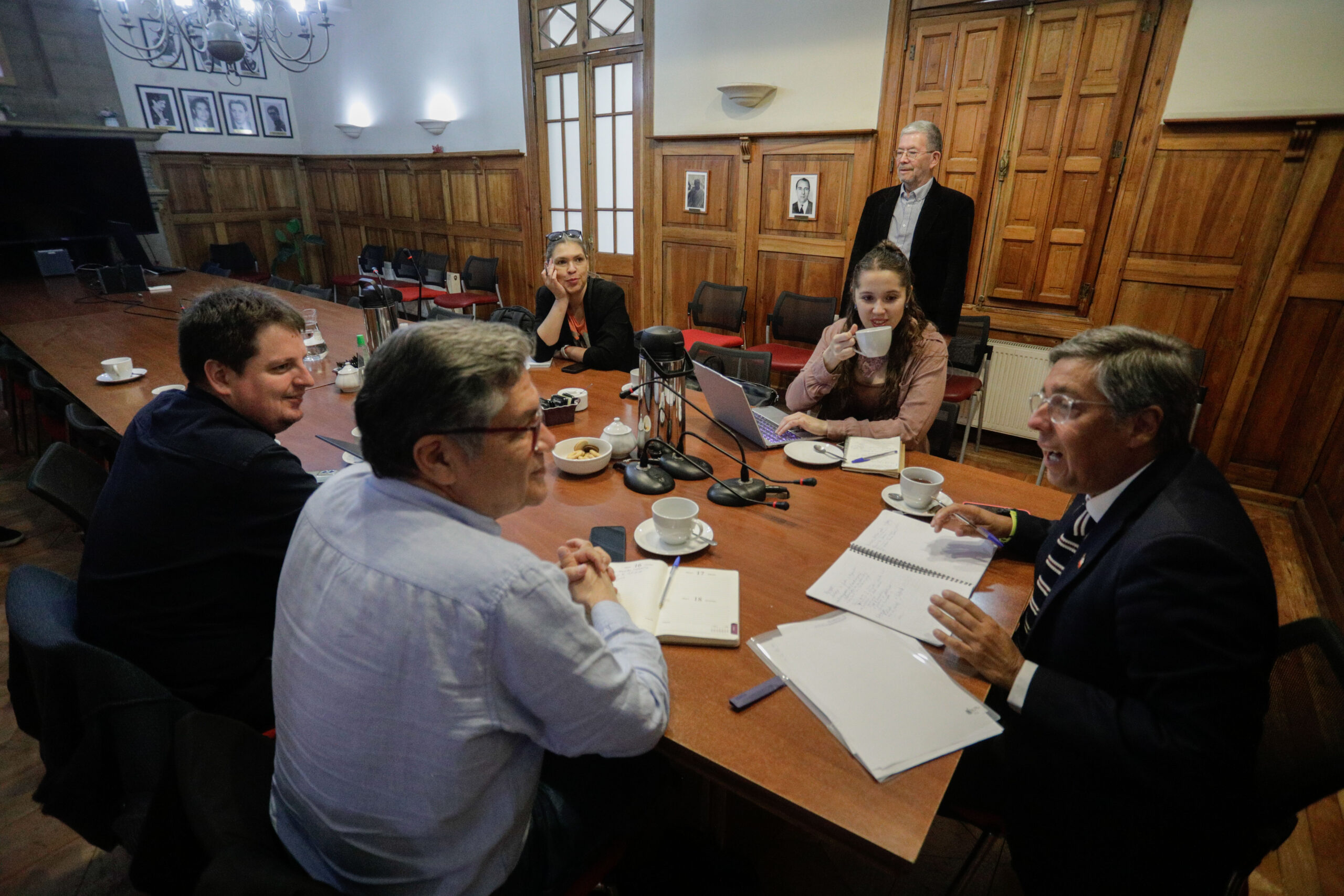
Minutes before 11:00 AM, the secretaries general of the opposition parties entered the headquarters of the Socialist Party to hold a coordination meeting, following their discussions yesterday on the initial steps to take in light of the new government. This meeting included them, the presidents of the parties, and the heads of the parliamentary groups in the Chamber and the Senate. Among those attending the meeting were the acting secretary general of the PS, Arturo Barrios; the secretary of the Broad Front, Andrés Couble; the secretary of the Communist Party, Bárbara Figueroa; the secretary of the Liberal Party, Nicole Troncoso; and the secretary of the Humanist Action Party, Efraín Osorio.
According to explanations from within the parties, José Toro from the PPD was absent due to an ankle injury. Upon entering the meeting, Barrios explained that the goal was to "build the work agenda for this moment, for this period, and in that line, we will begin a period of joint work throughout this time. " A little over an hour later, Barrios, flanked by the other attendees, explained that starting Thursday, a content committee would meet, composed of representatives from various think tanks linked to the parties, and another communication committee, made up of more political figures, to advance a joint agenda.
The tense opposition backdrop He commented that on Monday, April 6, the party presidents, secretaries general, and heads of the parliamentary groups would meet again to monitor progress and guide the coordination of the opposition. This meeting, although held after yesterday's gathering, was preceded by the division within the opposition that arose in the Senate after the PS made a pact with the ruling party to preside over the corporation during the second year of government. Opposition sources indicate that this negotiation occurred without the knowledge of other progressive senators and that the PS, which has the largest parliamentary group, only spoke with the right to reach agreements, thereby securing influential positions.
In fact, within the Socialist Party, some believe it was a good move, as in the Chamber—where the PS refused to reach agreements with the right to avoid sidelining the PC and FA groups—they lost all possibility of accessing presidencies or vice presidencies, even in the commissions of the Chamber of Deputies. Despite this, both the PPD and the DC negotiated presidencies of the commissions in the Chamber, further damaging relations with other opposition parties and generating tensions with the center-left as well. A common enemy All the tension, however, took a backseat after President Kast's government began withdrawing environmental decrees, announced a reconstruction plan with tax extensions for large companies, and opted to modify the Fuel Price Stabilization Mechanism via decree rather than through Congress.
While Broad Front senator Diego Ibáñez told The Clinic that the government's installation "has been a bombardment of pro…
Others, however, disagreed and viewed the government's offensive as an opportunity. "There has been no better way to unite the opposition than with this government," commented one of the attendees. This also occurred before the Foreign Ministry announced that, as the State of Chile, it would withdraw support for Michelle Bachelet's candidacy to lead the United Nations.
Both the president of the PS and senator, Paulina Vodanovic, and senator Ibáñez had warned of political consequences if Chile withdrew its support for Bachelet, and the opposition's alignment following the government's decision was immediate. Even though both represent the two wings of the opposition split in the Senate, they declared in the same line upon hearing the news. "Our country, with this decision taken by the government not to support President Bachelet's candidacy for the UN, loses a huge opportunity to contribute to multilateralism, to work in unity with other countries to solve the serious problems affecting the world today," said Vodanovic.
The FA senator also described the action as "a disgrace," stating that "withdrawing support undermines our diplomatic tradition and discards all political stature of those who represent us before the entire world.