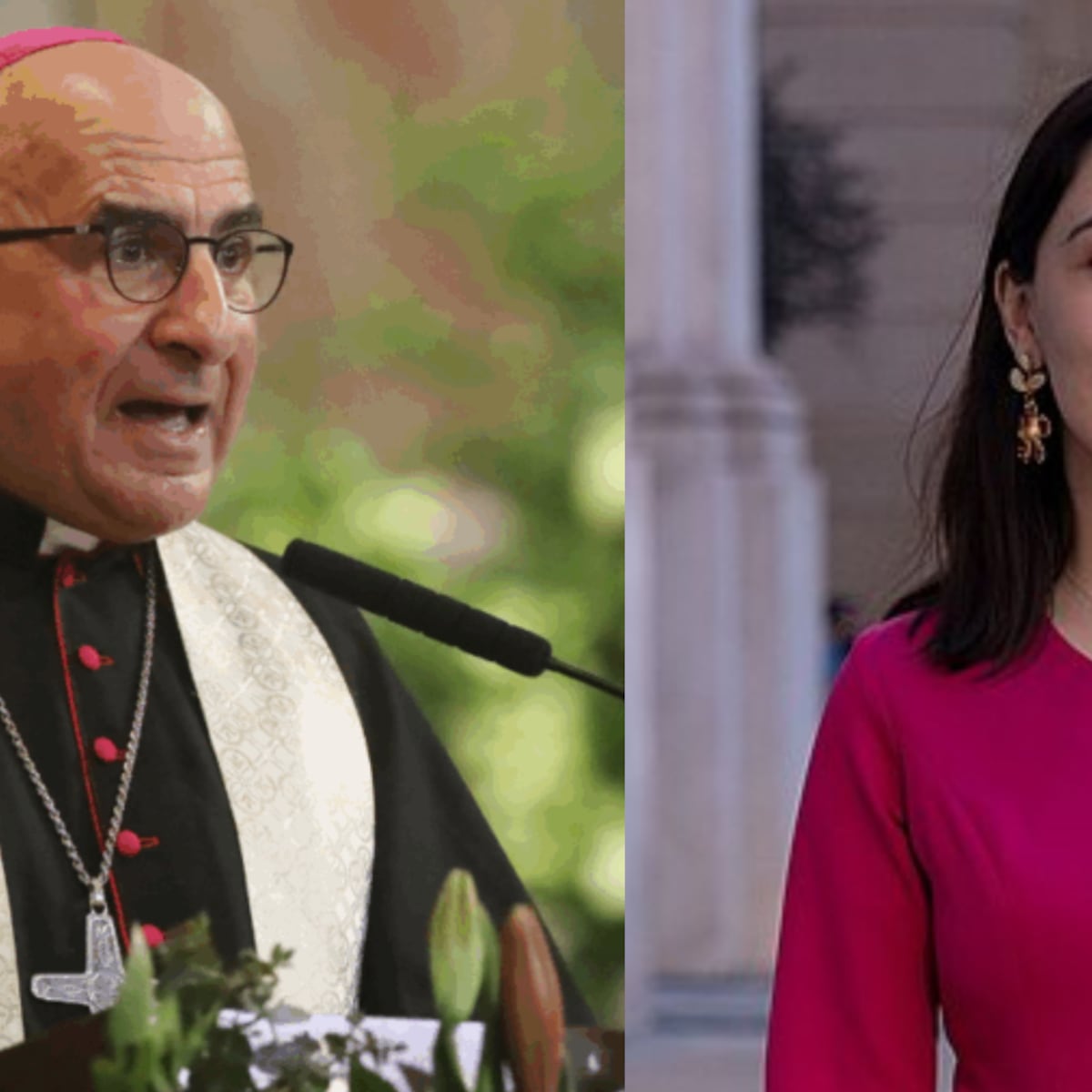
The Archbishop of Santiago, Fernando Chomali, addressed the controversy surrounding the departure of the director of the National Women's Service and Gender Equity (Sernameg), Priscilla Carrasco, amid her treatment for breast cancer, a situation that has sparked criticism from various sectors. In an interview with the T13 En Vivo program, the ecclesiastical authority approached the case cautiously, stating that he does not know the details that led to the Executive's decision. However, he emphasized that the situation opens a significant ethical debate regarding the treatment of people in vulnerable situations.
"I believe that one must act in life as follows: one must do to others what one wants done to oneself and not do to others what one does not want done to oneself," Chomali stated, referring to the principle of reciprocity as the foundation of social coexistence. In this context, he suggested that the Minister of Women and Gender Equity, Judith Marín, should "put herself in her (Priscilla Carrasco's) place and reflect on what her departure means. " The archbishop went further, asserting that the situation "involves a much deeper reflection related to this minimal sense of solidarity of doing to others what we want done to us and not doing to others what we do not want done to us.
" In his view, such decisions should consider not only administrative aspects but also the personal and human context of those affected. Chomali also highlighted the complex situation Carrasco is facing, describing it as "very painful from a medical, psychological, and family perspective. " In this regard, he stressed that, since she is a public servant who obtained her position through a public competition, "providing that guarantee seems to me to be the minimum.
" Finally, the religious leader called for evaluating such cases from a broader perspective, asserting that "the character of countries is measured by their ability to care for the sickest and the poorest.