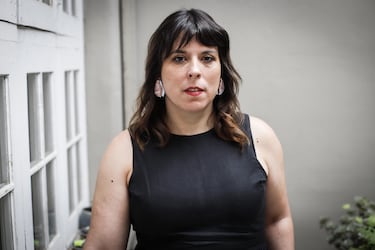
With the opposition lacking a clear articulation to confront the government of José Antonio Kast, the president of the Frente Amplio (FA), Constanza Martínez, warns of “the need for maximum possible unity” on the left. She will be one of the voices that establishes the sector's stance on some initiatives of the new administration, which have already raised alarms within her coalition. “These first days of government have meant very deep setbacks in terms of discourse,” she says.
This, she warns, weighs on the tone of the left: “The opposition needs to articulate around Kast's public policies. ” President Kast has intensified his agenda. The opposition initially appeared stunned and disorganized.
Was the government's offensive a surprise? The government is following a logic that has been expressed in other far-right governments, which has the tactic of flooding the debate and proposing many ideas in a very high-pitched framework. It presents a country emergency situation that does not align with reality and the data.
As FA, we have been articulating, working, and thinking about how we can address this scenario, considering Chilean families. How will they do it? Lautaro Carmona warned that coordination is lacking.
There is agreement on the need for maximum possible unity, without exclusions, and understanding that we are different p…
The government asked for the resignation of the superintendent of Education who was investigating the inflated salaries at USS, which had key figures in the investigation like Marcela Cubillos and Arturo Squella… In this, a natural articulation has been noted. Did you expect something different from Kast in his first days? We expected a willingness to dialogue and not a desire to destroy everything we had advanced as a country.
These first days of government have meant very deep setbacks in terms of discourse. I am very concerned. In football terms, Kast came in with his foot up, and that determines the stance we will have to take as an opposition.
Very important actors on the right are against Kast's most extreme measures. If we do not listen to Evelyn Matthei, Ignacio Briones, and Diego Schalper, to that diversity of people, we will have many coincidences with actors we did not imagine. Is it dangerous to be confrontational with Kast?
It implies that he sets the agenda. When they are proposing a bait-and-switch of what they want, which is to lower taxes for the super-rich and even further loosen the labor market with the possibility of reviewing the 40-hour workweek, I believe it does not depend on us; it depends on the government. It is the government that sets the tone of the opposition.
Here, it has been precisely José Antonio Kast who has created an atmosphere of internal enemy, of permanent debate, of conflict, and not of meeting or discussion. The right has tried to break the opposition by seeking agreements only with one sector. Do you see any enthusiasm in the PS for the idea of isolating the FA-PC?
No. In general, most parties are for unity, for the need to build broad agreements, without exclusions. You say that the majority is for unity.
What is the minority? It is not necessary to state it, because the majority will be working to achieve their involvement. I imagine you still consider it costly for some parties to approach the right over their natural allies.
It has consequences and is a problem. It is our responsibility to understand that, beyond any short-term gain. Our humble call from the FA is to understand that these challenges are very important and to perhaps leave behind good personal moments.
A call for more responsibility? More responsibility, yes. On the brink of the FA's ideological congress, what can be expected from you as an opposition?
The FA is more than just an opposition party. We will be a dialoguing opposition on points that can provide relief for Chilean families, but we will be relentless on everything that means a setback to decades of progress. The invitation to Kast's government is that hopefully, it can build on what we have already advanced and not destroy everything that has been worked on so hard.
We are not a party that intends only to oppose something but to build a path of social justice. The FA has internal elections this year. Will you seek re-election?
I have not made any decisions at this time. I am focused on everything that was the end of the government and on building and outlining our work as an opposition. Also on strengthening the FA.
They are in a process of reviewing Boric's government, which includes self-criticism. What mistakes contributed to the right gaining power? We have pointed out how complex it was to have so many elections, the two constitutional processes.
Also, the lessons we learned from the crises, from what it meant to lose the tax reform. But it happens to me that we are asked if we learned to moderate our discourse. If someone expects the FA to regret having said that it is against the AFPs, against gender inequality, in favor of greater social justice in our country, that will not happen.
I am proud of the principles that have formed our party. In the FA, they identify several achievements of Boric's administration. Were they well communicated?
A challenge for any progressive party is that citizens become part of the processes. We were also unclear about the brutal opposition we faced in each of those projects.