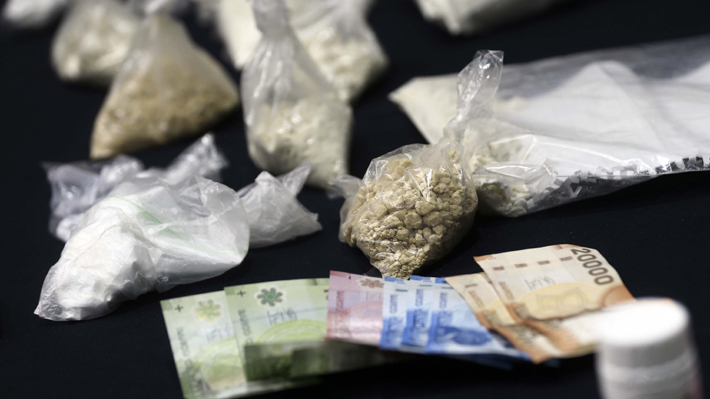
According to Echeverría, the system consists of installing automated equipment in treatment plants, where "a robot takes samples 24 hours a day, over a complete week. This allows for a representative volume of the water flow to be obtained, and therefore, the behavior of the population. " The collected samples are subsequently processed and sent to specialized laboratories, where various illicit substances are analyzed.
Based on these results, it is determined which drugs are present and in what concentration. This methodology does not aim to detect the drug in its original form, but rather "in the case of cocaine, we do not look for the pure substance, but for its metabolites, which are the compounds generated when the liver processes it. This ensures that we are measuring human consumption.
" Results from Copiapó The results position Copiapó in a critical scenario on a global level. In the local pilot study, the city reached values close to 1,500 milligrams of cocaine per 1,000 inhabitants per day, figures that are significantly higher than those of other analyzed cities, which are around 120.