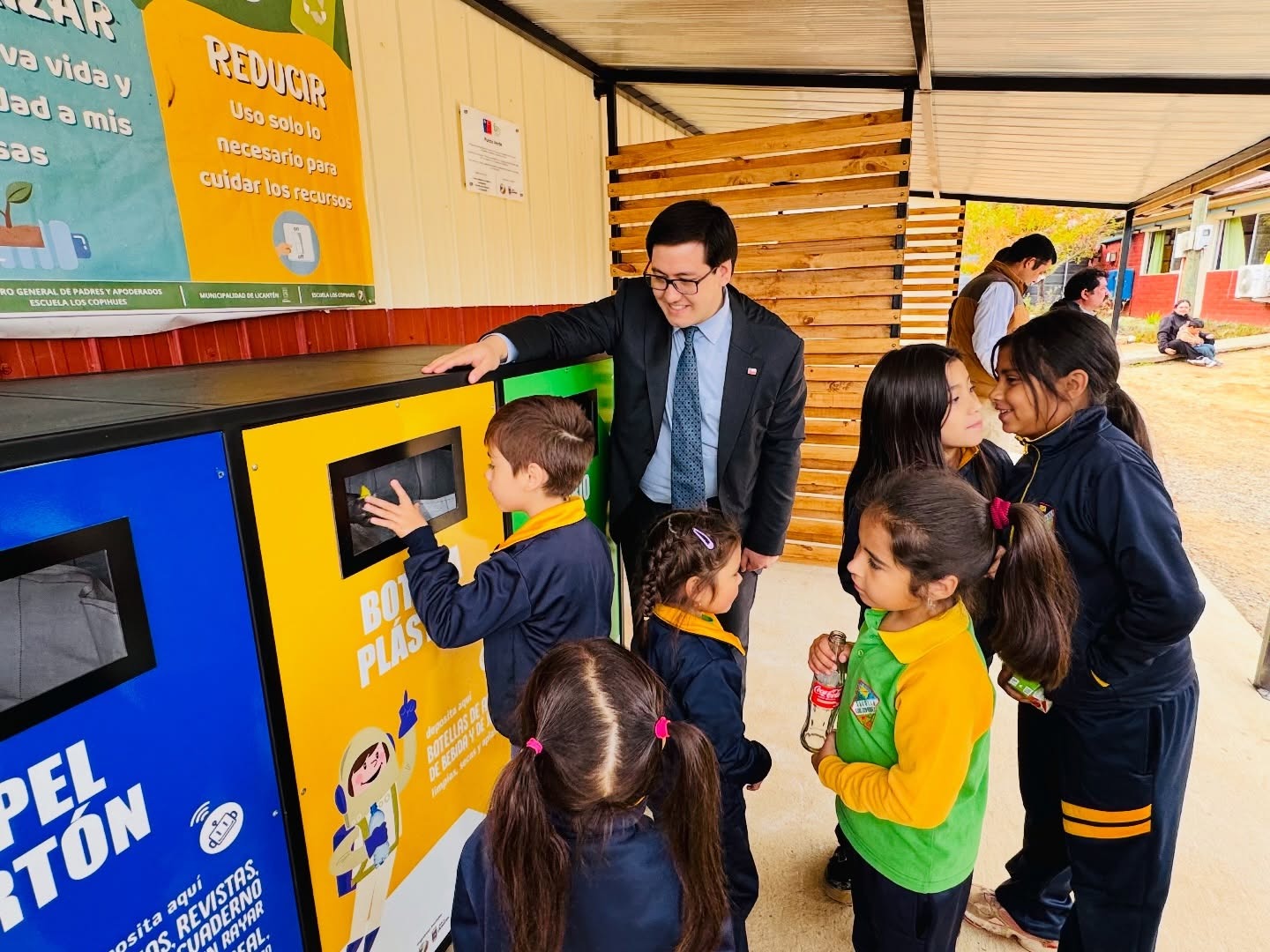
The Los Copihues School implemented a green point and educational activities that promote recycling and responsible waste management. With the installation of an ecological point and the execution of various educational activities, the Los Copihues School in Licantén successfully concluded a project funded by the Environmental Protection Fund (FPA), aimed at strengthening environmental education in its school community. The initiative, driven by the Parents and Guardians Center of the establishment, allowed for progress in waste management and the promotion of sustainable habits among the nearly 80 students who make up this rural school located in the Los Junquillos area.
The project had an investment of 6 million pesos, provided by the Ministry of the Environment (MMA), resources that facilitated the installation of the green point at the main entrance of the facility, as well as the organization of workshops, theater performances, audiovisual material, and a photographic exhibition to reinforce learning about recycling and the circular economy. During the closing ceremony, the regional minister of the Environment of Maule, Felipe Massardo, highlighted the impact of the initiative. “I feel a deep joy to see that this project is reaching a successful conclusion and that the proposed objectives were met,” he stated.
He also emphasized that this milestone marks the beginning of new challenges: “This is the start of a phase where the community must make good use of this green point. ” For his part, the mayor of Licantén, Claudio Reyes, appreciated the commitment of the educational community. “This project was necessary, especially for children to grow with environmental awareness.
They have the challenge of promoting recycling at home as well,” he noted. From the school community, the president of the General Parents Center, Pamela Sperling Iturriaga, highlighted the comprehensive approach of the project. “We managed to transform the space into a welcoming place that facilitates recycling, along with educational experiences that made this learning close and meaningful for the students,” she explained.