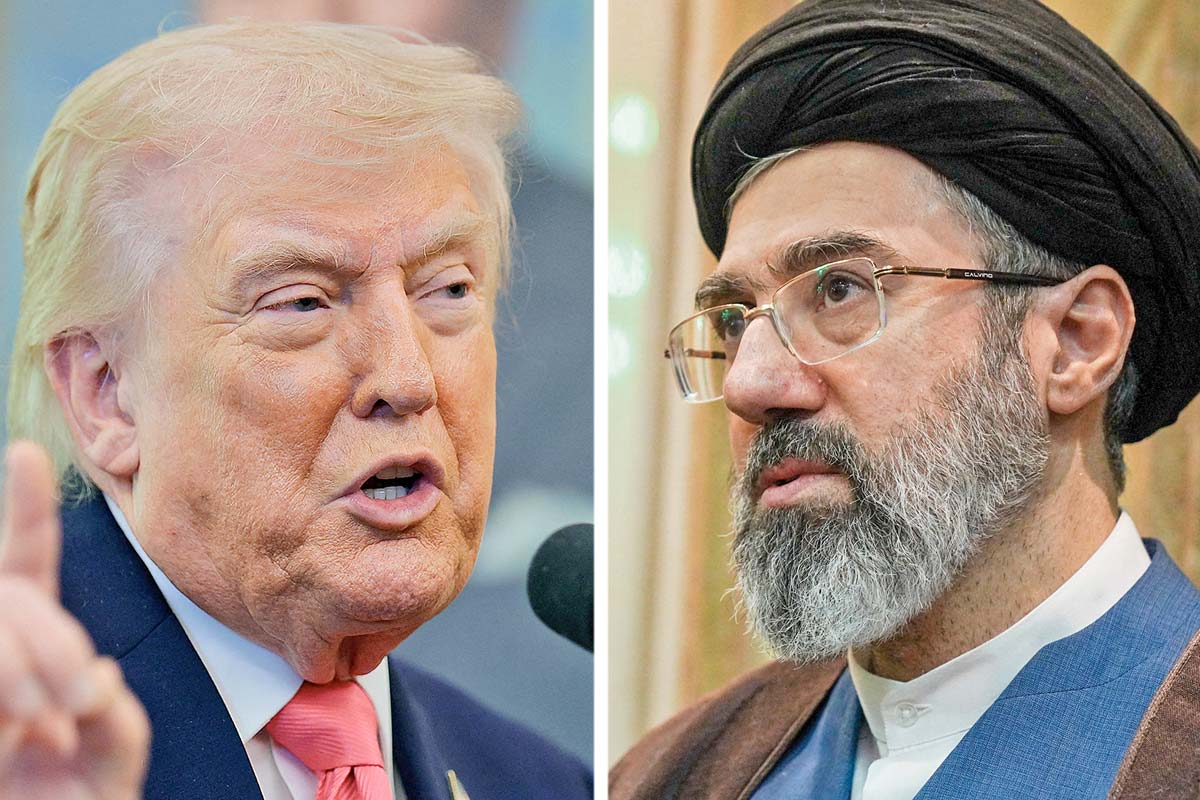
After a week of conflicting reports about the existence of dialogue between the United States and Iran to end the ongoing war in the Middle East, it became clearer on Wednesday what ground is being tread. Indirect negotiations are taking place between Washington and Tehran, with Pakistan, Turkey, and Egypt acting as mediators. How are those conversations progressing?
Here the matter becomes complicated again. On Tuesday night, it was revealed that the U. S.
had drafted a document with 15 points to negotiate a ceasefire. Early Wednesday, sources from Pakistan claimed that this plan was already in the hands of the Islamic Republic, which quickly made its rejection of the proposal public. In general terms, the White House proposed measures such as lifting sanctions, dismantling the Iranian nuclear program, limiting its missiles, and reopening the Strait of Hormuz.
The Iranian state broadcaster Press TV, citing a senior government official, reported that Tehran "reacted negatively" to Washington's proposal, calling it "a ploy to increase tensions" and considering it "disconnected from the reality of the U. S. failure on the battlefield.
" Later, Abbas Araghchi told Iranian television that "any ceasefire without guarantees is a vicious cycle that would lea…
"Do not call your defeat an agreement. The era of your promises has come to an end," it added. The Egyptian Foreign Ministry, one of the mediators, stated that the differences between the U.
S. and Iran "can be overcome. " "This could be the last opportunity to reduce tension and avoid a total escalation in the region," it added.
Iran's Alternative The Iranians went a step further. In addition to expressing their rejection of the U. S.
plan, they proposed a counteroffer aimed at ending hostilities, articulated around five points. In this proposal, under the guidelines of Supreme Leader Mojtabá Jameneí, Tehran bases its request on a comprehensive cessation of attacks and operations attributed to the U. S.
and Israel, along with the establishment of mechanisms that provide guarantees against the recurrence of conflict in the future. Additionally, the proposal includes a request for compensation for damages incurred since February 28, as well as the cessation of U. S.
and Israeli military actions directed against Hezbollah in Lebanon and against pro-Iranian militias in Iraq. The proposal is completed with the aspiration to obtain international recognition of Iranian authority over the Strait of Hormuz. In light of these definitions, Brent crude oil prices fell, closing the day down 2.
27% at $102. 2 per barrel. Shortly after Iran's rejection of Washington's proposal became public, the White House spokesperson held a press conference where she adhered to the optimism recently expressed by Trump, labeling the negotiations with Tehran as "productive.
" Nevertheless, she stated that "if Iran does not accept reality and does not understand that it has been defeated, President Trump will ensure that it receives a harsher blow than ever," adding that the president "does not boast and is ready to unleash hell. Iran should not make another mistake. " Indirect Negotiations Two previous diplomatic attempts that ended in war underpin Iran's reluctance to negotiate with Washington, an Iranian diplomat told the Wall Street Journal.
However, this same source maintained that the Islamic Republic has not closed the door to indirect talks. In Egypt—one of the mediating countries—Foreign Minister Badr Abdelatty stated that the differences between the U. S.
and Iran "can be overcome," adding that he hopes direct negotiations will resume soon, as "this could be the last opportunity to reduce tension and avoid a total escalation in the region. " Indeed, the continuation of hostilities highlights that risk. On the same Wednesday, Iran continued its attacks directed at Gulf countries.
Saudi Arabia reported new missile and drone attacks against one of its eastern regions, rich in oil. Additionally, an undetermined number of drones attacked a fuel tank at Kuwait International Airport, according to the country's General Civil Aviation Authority. Meanwhile, Israel continues to intensify its offensive in southern Lebanon, where Hezbollah leader Naim Qassem stated that his militants "will continue without limits and are willing to make sacrifices without restrictions.
" According to senior researcher at the Middle East Institute, Brian Katulis, "what makes this moment particularly dangerous is the convergence of multiple lines of conflict. It is not just about the U. S.
-Iran or Israel-Iran; it is a network confrontation that is more difficult to de-escalate once it gains momentum.