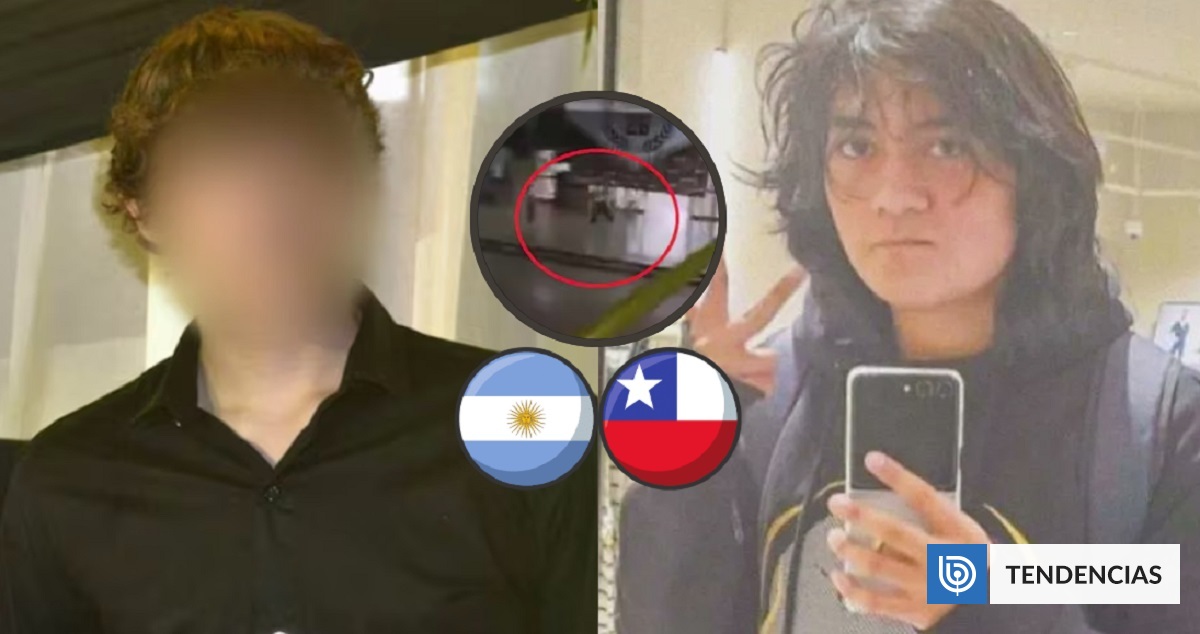
Argentina is still trying to process an unprecedented massacre in just over two decades: a 15-year-old student entered the Mariano Moreno School No. 40 in the small town of San Cristóbal (Santa Fe), killed his classmate Ian Cabrera (13), and injured two others. This occurred almost simultaneously with a violent week in Chile: alongside the notorious crime in Calama, where an 18-year-old killed a school inspector, a 15-year-old entered armed in Curicó, and another teenager was stabbed, also in Calama.
The incident, reminiscent of many shootings in the United States, took place early in the morning on March 30, when the school routine was still unfolding during the flag-raising ceremony. The student carried a 12/70 caliber double-barreled shotgun, used for hunting, hidden inside a guitar case. He fired between four and five times, killing 13-year-old Ian Cabrera, with whom he had no prior connection—it's believed the shooting was coincidental—and injuring two other boys.
The sequence ended when a school assistant tackled him and managed to subdue him. Subsequent judicial reconstruction indicates that the attack may have been planned. Nevertheless, the attacker is not criminally liable under current legislation.
As explained by the provincial Security Minister, the 15-year-old cannot receive a prison sentence. The reform by Javier Milei, which lowers the age of criminal responsibility from 16 to 14, approved by Congress last February, has not yet come into effect: it will be effective 180 days after its publication in the Official Gazette, meaning it will only take effect on September 5. Consequently, the judicial process will focus on “curative, protective, and safeguarding measures.
” In an interview with Aire de Santa Fe, the defense revealed that the shooter was experiencing self-harming episodes an…
The contrast between the “good and calm student” described by teachers and the one who committed the homicide is perhaps one of the most disturbing points. There were no clear institutional alerts or prior interventions from the system. Another aspect that gained traction in the following days referred to the digital realm.
Social media profiles attributed to the 15-year-old, revealed by Infobae, showed a repeated consumption of content related to school shooters. References to cases like Columbine, Virginia Tech, or the massacre in Serbia appeared in videos, images, and replicated aesthetics. From incel communities to a global culture of violence, even penetrating small towns, circulating in meme format, TikTok, or “epic” narratives.
The Argentine case found a reflection in Chile almost simultaneously. In Calama, an 18-year-old student, identified as Hernán Meneses Laal, attacked the educational community of the Obispo Silva Lezaeta Institute on March 27 with a knife. He killed a school inspector and left four injured, including three students.
The investigation was advancing to determine that the attack had been planned for at least four months. The young man locked himself in a bathroom, dressed in black, put on goggles, and emerged armed with a 30-centimeter double-edged knife. The sequence in Calama shares elements with Santa Fe, such as prior preparation, the choice of a school setting, and multiple victims, in addition to celebratory content on social media regarding violence.
Again, there was a backdrop of mental health issues: severe depression, according to reports cited by La Tercera. Investigators believe Meneses Laal aimed to kill more people and then commit suicide, leaving traces of that intention in writings and digital content. During the week, the phenomenon “moved” to Curicó, fortunately without victims.
A 15-year-old was arrested while attempting to enter the Japan Polivalent School armed with a loaded weapon. Last Wednesday, another episode of violence with a knife among students in Calama left a young man stabbed. Two students confronted each other outside the educational facility, and one of them stabbed the other, aged 15, before fleeing.
The recent episode in Santa Fe brought to mind the collective memory of the tragedy in Carmen de Patagones, in southern Buenos Aires province, in 2004. At that time, Rafael “Juniors” Solich, just 15 years old, used his father's service weapon, a member of a security force, to open fire on his classmates, resulting in three deaths and five injuries. However, the first major incident of this century occurred in 2000 with the case of Javier Portillo, derogatorily nicknamed “Pantriste” for his resemblance to a character from Manuel García Ferré's animated series.
The 19-year-old reacted lethally after years of suffering harassment and mockery for his withdrawn personality. After an episode of mistreatment, “Pantriste” returned to his school with a . 22 caliber pistol belonging to his parent.
The attack ended with the death of 16-year-old Mauricio Salvador. Like in the case of “Juniors,” the process concluded with a declaration of non-responsibility, accepting the defense's argument regarding the mental alienation resulting from systematic bullying.