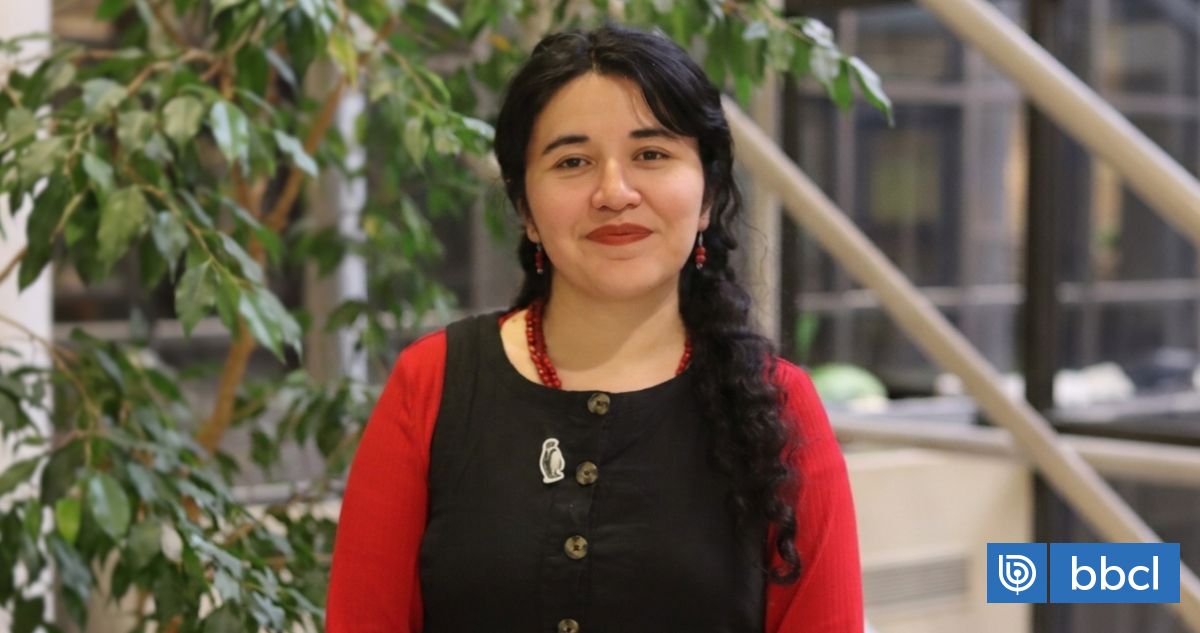
Days before assuming the leadership of the Communist Party (PC) parliamentary group, Deputy Daniela Serrano agreed to BBCL's request to discuss current issues. Among the topics are the first weeks of the Kast administration, the controversial rise in fuel prices, and the reorganization of the opposition sector. Her criticisms are directed at La Moneda.
In her view, “a campaign based on security, on this fear, is not coherent with the policies we are currently seeing. ” This refers to budget cuts by the Executive. Regarding the rise in fuel prices, the PC member accuses the government of trying to shift responsibility to Congress.
Politically, she acknowledged that there are “different oppositions,” but highlighted coordination efforts to confront the government in a united manner, beyond any particular figure. The parliamentarian also addressed the controversial decision by the Executive to withdraw support for Michelle Bachelet's candidacy to the UN, asserting that it undermines Chile's image internationally. Finally, following her trip to Cuba, Serrano defended maintaining Chile's relations with the island, appealing to a historical connection and respect among countries in the region.
**Education and Fuel Price Increase** —From the opposition, there have been accusations of “cuts to social rights” due to the project that would limit free university education. How can this situation be addressed? We had a session with the Minister of Education (María Paz Arzola), where we insisted on transparency regarding where these budget cuts will occur.
We still have no news. In fact, a large part of the session was dedicated to this, but they only talk about the deficit…
We have only learned through the press, and in fact, the ministry that attended that session was not explicit even about whether they would introduce a bill or modify the free education law. —Are you waiting for that detail? More than waiting, we expect legitimate answers to the questions we posed to the ministry.
In fact, if the ministry does not continue to respond to the questions raised in the Education Commission, we will need to seek other mechanisms through official letters or even continue holding special sessions until it is made clear where these cuts will occur. —What do you think of President José Antonio Kast's warning about potentially publishing the list of CAE debtors? I believe it does not resolve the underlying problem because we have a failed policy with the State-Guaranteed Credit (CAE), and that has been recognized by former President (Sebastián) Piñera and the government of Gabriel Boric.
Various discussion initiatives were made; however, today it seems the only formula is to say “we will publish it,” but that does not address the core issue, especially considering that in the proposed cut of $1. 5 million, a large part of the indebted CAE holders and other credits are not included. —How does the opposition view the government's proposal to reduce the security budget by more than $72 billion?
In the midst of a crisis, the “Streets Without Violence” plan and others will be affected. The “Streets Without Violence” plan, the organized crime policy, Carabineros, and the PDI would be affected. It seems quite contradictory because what we have also brought to Congress are proposals on security.
President Gabriel Boric initiated a fast-track legislative process, even opening up various urgencies with the opposition, but here the voice of those of us who are in opposition is not considered, saying, “Hey, these cuts are quite harmful,” and we have also learned that the regulation from the Ministry of Security was withdrawn. A campaign based on security, on this fear, is not coherent with the policies we are currently seeing in the early days of government. - Deputy Daniela Serrano —As a sector, you have been critical of the decision that led to the increase in fuel prices.
Was this the way to respond from the Executive? What kind of response would you have expected with fiscal austerity? I think it is important to focus on the policies taken by the government because it seems they are intent on shifting this responsibility to the National Congress.
However, the rise in fuel prices was through a decree. They brought this discussion to Congress for the kerosene subsidy, which was through a collection, meaning they are not even looking for immediate state funds but will provide a type of subsidy through the collection we will ultimately put in place. However, little has been said about the decision already made by the President, which we hope he will reverse.
It is in the hands of the President of the Republic to issue a decree... I think it is also important to discuss these complementary or “mitigation” measures when they are announced after the decree has already been published in the Official Journal. However, we see that from La Moneda, there is no plan to address this situation.
The unions claimed this took them by surprise, and in the municipalities I represent, like Pirque and San José de Maipo, there are no complementary or mitigation measures accompanying this price increase... it is only intended for the Greater Santiago system, leaving regions and rural municipalities out where the network does not reach. It seems they (the government) are intent on shifting this responsibility to the National Congress.
- Deputy Daniela Serrano on the rise in fuel prices —Although the vote in the Chamber was unanimous, there were abstentions in the Senate from the sector regarding support measures for the rise in fuel prices... What would you have expected for a 100% approval? What we first saw, and I take responsibility for the Chamber's vote, where we later voted in favor of each article individually, was that the cost or transfer of this cost to small and medium-sized enterprises (SMEs) should be excluded.
This was achieved after an indication that arrived very late at night, and in the Chamber, at least, article four was rejected. In the Senate, it was reinstated, and they also provided the mechanism to exclude small and medium-sized enterprises from this collection mechanism. That is why we later voted in favor.
However, what concerns me is that the government does not have a clear view of all the impacts this will have on small and medium-sized enterprises, not only through this collection mechanism that we successfully halted in the Chamber, which is why the Executive presented an amendment to its article four, but also regarding the cost of living. We are talking about an increase in the prices of essential goods. —How effective is it that the government of former President Gabriel Boric left the fiscal coffers in deficit?
Is there any self-criticism regarding this? First, it should be noted that they did not even say we were in deficit; they said the State was bankrupt. Now they are backtracking on that, understanding that much of their discourse regarding their government program has been linked to lowering taxes for the large contributors in our country.
When we confronted that, they told us, “No, we need foreign investment. ” However, with this discourse on the international stage, they put us in a disadvantageous situation where Chile would not be an attractive country for further investment. Clearly, this has already been clarified, but we believe this sort of improvisation, or even a repeated debate where they say there is no cash and that there is a fiscal deficit, is often not taken with the responsibility it should be.
Why? Because we have faced budget discussions year after year, and it was the same opposition that repeatedly, to approve the national budget, spoke of a reduction of $6 billion for the State. So, we are talking about them saying there is a deficit today, while previously they did not behave coherently with that.
I believe, as former Minister (Nicolás) Grau has said, that Chile was also handed over with conditions that speak of low inflation, and today the one primarily causing economic difficulties is this government with such abrupt decisions or even those that do not have a mitigation measure like the rise in fuel prices, which already indicate a prediction from the Central Bank that inflation in Chile will be much higher than previously projected. They put us in a disadvantageous situation where Chile would not be an attractive country for further investment. **Reorganization of the Opposition under the Kast Administration** —New political cycle.
In the context of the reorganization of the sector, now as the opposition, who leads? Do you recognize key figures? We believe there are different oppositions, and it is important to acknowledge that, but also understanding that these oppositions must act in a united manner today.
At least regarding the efforts made from the opposition, we first have an administrative agreement that, while it did not prosper, we believed we could bring together various sectors from the Communist Party to the PDG, and we believe that also spoke to the need for the voice of the National Congress not to be solely the hegemonic voice of the Executive. Unfortunately, we also know how the voting ended, but there was a first effort. We are talking about efforts that were not merely testimonial but managed to unite different parties.
Now, regarding the programmatic aspect, I believe there is also an exercise, especially concerning my role in the Chamber of Deputies, to seek joint actions to confront the political scenario this government is imposing on us... At least we, as the opposition, do act together with the Broad Front and the Socialist Party, and we believe that is part of showing that the unity of the opposition cannot be reduced to an electoral phenomenon but is also deeply programmatic in terms of defending social benefits and social rights. There are different oppositions, and it is important to acknowledge that.
- Daniela Serrano on the reorganization of the sector as the opposition —In these different oppositions, which other party is the PC close to? Have the differences that existed at the end of the Boric administration been overcome? Differences will always exist; I think it is important to de-dramatize that.
However, I believe that the unitary character and the fact that these differences do not ultimately break down dialogue among the various political forces that are now in opposition is the most important thing. The demonstration, primarily of building an administrative agreement and also seeking a united position on these bills, was evident this week. All actions and votes on the bills were quite united among the Broad Front, the PC, and the Socialist Party.
—Álvaro Elizalde has been quite active and critical. From the PC parliamentary group, do you recognize the former minister as someone who can generate consensus to be considered a valid interlocutor? Or would you expect another figure, like Jeannette Jara or Camila Vallejo?
I believe all parties also have their personalities and their political figures with greater experience within the government, which are clear leaderships of the opposition. I would not place Álvaro Elizalde, Jeannette Jara, or Camila Vallejo as hegemonic leadership; rather, it relates to the capacities that each party is putting forth to unify through their parliamentarians, their personalities, and their senators in this unitary programmatic character we must have at this stage. —And former President Gabriel Boric?
He is also a leadership figure, especially from the Broad Front, and I believe that is recognized. I mean, he is a former President of the Republic, where we also unify a large part of our efforts and the work in programmatic matters that could be advanced in Congress, where the opinion of the former President is also well received in this process of building programmatic opposition. —A government memo was leaked to address criticisms regarding the withdrawal of support for Michelle Bachelet's candidacy to the UN.
Among the questions to be answered is whether the former president is being abandoned or if the situation is a disgrace. How do you qualify this? I think it is a disgrace because this is not the first incident this week that shows how little this government cares about what we can project internationally.
We are talking about a bankrupt state, and now we are discussing the withdrawal of support for a candidacy of a former president, even saying that there is a dispersion of candidacies in Latin America that is important, but very little is considered regarding the status that the State of Chile can acquire, understanding that it is putting forth one of the best presidents it has had since the return to democracy. It is a disgrace. - Deputy Daniela Serrano on the withdrawal of support for former President Michelle Bachelet's candidacy —Isn't the situation similar to when President Boric decided not to support the candidacy of jurist Claudio Grossman for the International Court of Justice (ICJ) in The Hague in 2022?
No, I see it differently because we are talking about a former president who also has significant popular support and who was elected to this responsibility for two terms. **Trip to Cuba** —In the context of your trip to Cuba, along with other parliamentarians, would you expect a state response? Is it possible to have humanitarian relations with Cuba during this administration?
I think that is more of a question for the current government. What we expect at least from the State of Chile is to maintain the same relations it has had with the Cuban state. We believe that it is important, first, because we are talking about recognizing the peoples of Latin America, and we cannot be subjected, especially to the control that the United States is trying to exert over our region.
In that sense, we hope that in a friendly manner, especially understanding the long-standing recognition between the State of Chile and the Cuban people, these relations can prosper. —In your opinion, is the blockade by the United States the only problem on the island, or do you also recognize administrative shortcomings? I cannot give you a judgment on administrative shortcomings because I believe that is more of a responsibility of the Cubans; it is their responsibility regarding the administration of a state.
Now, regarding the current situation in Cuba, it is primarily a crisis linked to the worsening of an economic blockade that has existed since 1959. Today, their main difficulties are that they cannot receive oil... we are experiencing a rise in fuel prices, which brings difficulties for our country's economy; imagine what it is like not to have a drop of oil entering the island.
So, we are talking about a humanitarian situation; it does not even correspond to whether we like the current administration of the State of Cuba or not. —What do you think of the image behind the delivery of an AKM rifle to singer-songwriter Silvio Rodríguez? Should Cuba prepare for armed struggle or just appeal to diplomatic dialogue?
I believe Cuba has always insisted on diplomatic dialogue. In fact, there are various letters that have been taken to the United Nations to vote against the economic blockade. The Cubans have never wasted the opportunity, especially regarding institutionalism and the ordering of international law.
Now, regarding this symbolic act with Silvio Rodríguez, I think it primarily responds to a symbolic act. From my experience in the island, there is no preparation or predisposition to say, “Well, now we are going to defend everything through armed means. ” There were activities of international solidarity, with more than 30 countries and over 300 delegates appealing to resolve this blockade through international pressure, which is not the same as this symbol sought with this more symbolic delivery and the activity that was done with Silvio Rodríguez.