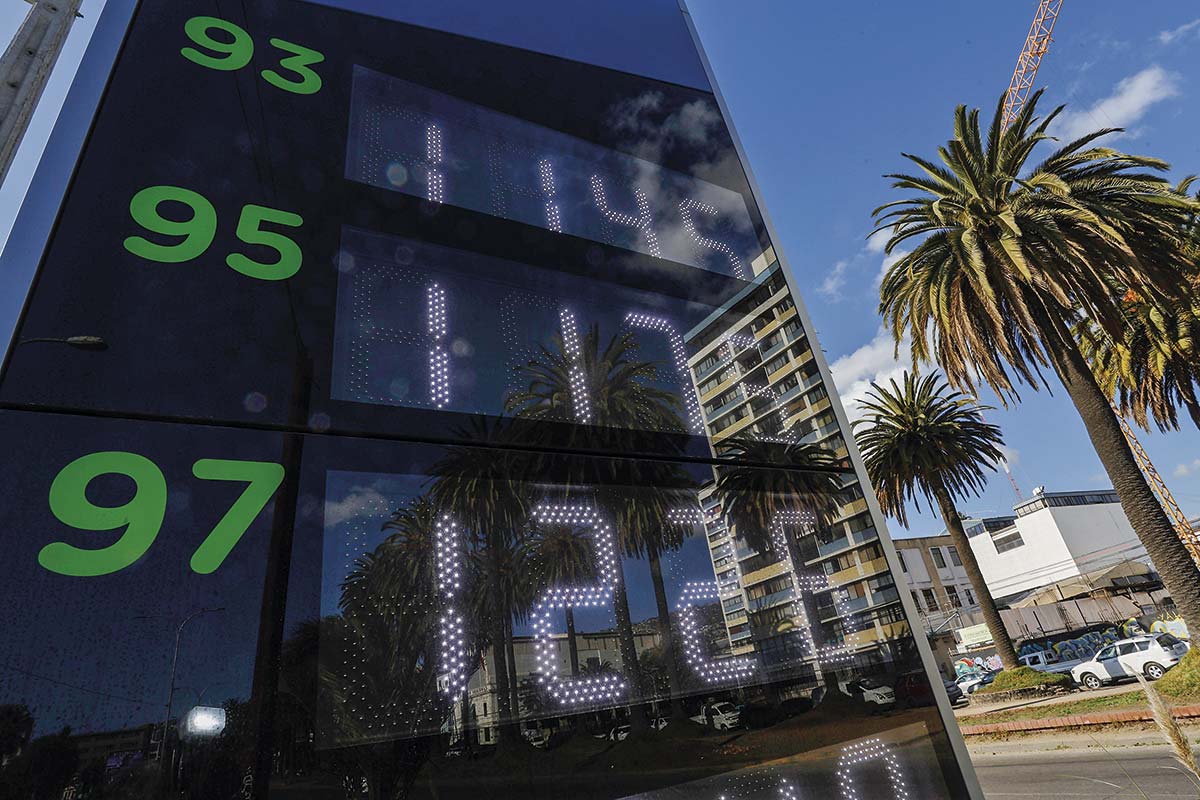
The shift evidenced by the Central Bank through the first Monetary Policy Report (IPoM) of the year compared to December was valued by the market. The new scenario, characterized by the uncertainty caused by the war in Iran that began at the end of February, and the rise in oil prices, led the central authority to raise its inflation forecast for December of this year from 3. 2% to 4%, and to project a return to the target by 2027.
At the same time, it cut the GDP growth estimate from a range of 1. 5% to 2. 5% to a range of 2% to 3%.
According to BICE Inversiones chief economist Marco Correa, the IPoM reflects a more challenging local outlook, marked by high external uncertainty, with visible effects on fuel prices and, consequently, on inflation. "This context complicates the conduct of monetary policy. At the same time, the lower impetus of public spending also affects the moderation of growth prospects," he commented.
From Santander, they stated that the March IPoM shows a "significantly more complex scenario than that of December" and highlighted the explicit adoption of a meeting-by-meeting assessment approach for the Monetary Policy Rate (TPM). Bci's chief economist, Francisca Pérez, emphasized the "cautionary message" from the Central Bank and its anticipation regarding the development of the external scenario. Activity and inflation However, some analysts distanced themselves from the economic projections provided by the central bank this Wednesday.
Correa indicated that while they share the general diagnosis of the IPoM—of a more demanding scenario, with higher infla…
However, he specified that this would be contingent on the fuel shock not amplifying and that oil prices moderate their trajectory in the second half of the year. In terms of activity, he expects GDP to grow by 2. 7% this year, subject to the realization of advances in the pro-investment agenda and that the external environment does not deteriorate.
"The IPoM's baseline scenario incorporates a lower fiscal impulse, which, along with a deterioration in the terms of trade, explains the adjustment in the growth range. However, we see elements that could partially offset this effect. In particular, there are improvements in business expectations and progress on significant mining projects that could sustain greater expansion," he said.
Santander also differed from the central authority regarding the projected trend growth of 1. 9%, estimating it would be 2. 5%.
In the case of JPMorgan's chief economist for the Southern Cone, Diego Pereira, he agreed with the main macroeconomic projections of the Central Bank. In a report, he indicated he expects a growth of 2. 5% for this year; however, he specified that according to his forecasts, inflation would reach 4.
4% annually in June, while core inflation would end at 3. 6% in 2026. The chief economist of Banco Itaú, Andrés Pérez, revised his forecast for activity this year to slightly above 2%, but specified that "a more substantial advance in the measures to reduce permits could accelerate private investment in the second half of the year.
" Credicorp also agreed with the central bank's numbers: they project a GDP of 2. 4% in 2026 and inflation of 4% by the end of the year. Like Pérez from Bci, they estimated that activity would grow by 2% and that internal prices would be at 4%.
Possible rate hike Regarding the course of monetary policy, Pérez from Itaú mentioned that "in light of an inflationary scenario that changed abruptly since February, there is no alternative but to maintain the TPM at 4. 5% and wait for more clarity on the resolution of the conflict in the Middle East. " However, he stated that it is likely that market rates will continue to show a moderate increase in the coming quarters.
Correa shared this perspective and noted that in the short term, the space for new rate cuts will be limited, so he expects a pause in movements while the effects of the external shock persist. "Going forward, as these factors dissipate, which could happen by the third quarter, there would again be room to gradually resume the monetary normalization process," he said. Pereira, meanwhile, maintained his reference forecast that the TPM will remain stable in the short term, although risks point towards increases.
"It does not seem likely that policymakers will repeat the mistakes made in 2021-22, when the argument of 'transitory inflation' kept the real ex-ante interest rate at deeply negative levels," he explained. Meanwhile, Pérez from Bci specified that a temporary rate hike would not have a significant impact on the trajectory of inflation, which by the end of 2027 would be close to the target, so he expects it to remain at 4. 5% unchanged during 2026.
"And if a preventive hike is necessary due to a greater inflationary shock from international oil prices, this hike should materialize before what has been indicated," he emphasized.