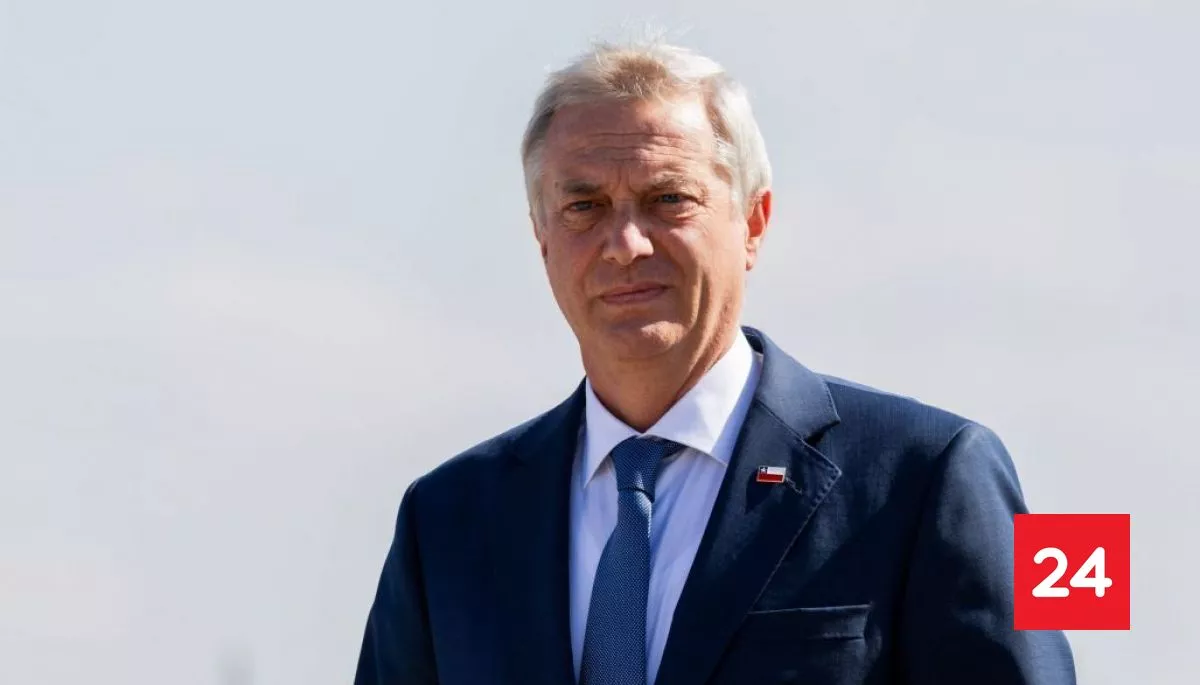
The government knew that announcing the significant increases in fuel prices would come at a high political cost. This is why they prepared the way in which the information would be disclosed. Finance Minister Jorge Quiroz was chosen to deliver the news, which he did through interviews with five television channels, recorded on Monday afternoon but agreed to be aired from 9:00 PM.
The following day, a briefing was distributed with instructions on how to respond to media questions, and it was decided that Government spokesperson Mara Sedini and Minister of Transport and Telecommunications Louis De Grange would face the microphones. With a clear script, the minister stated that, despite the cost, “we cannot continue making decisions with political benefits at the expense of Chileans,” reaffirming that the government is willing to bear the consequences of its decision, no matter how unpopular it may be. However, there are those who see risks that the Executive apparently did not foresee.
“This has high political costs because inflationary shocks hit people very hard,” said Patricio Navia, director of the Electoral Observatory at Diego Portales University. The political scientist warned that “if the government’s approval drops very quickly, parliamentarians will not want to work with it because no one wants to work with an unpopular government. They will not be able to carry out tax reform if the middle class is paying much more for transportation and if inflation increases.
” Calculations are already being made regarding how much other goods and services will rise due to the increase of $370 per liter of gasoline and $570 per liter of diesel. “The government will pay a political cost, as generally happens when responsible measures are taken in times of crisis, because citizens’ expectations were very high, and this will clearly be, in the eyes of a large percentage of the population, a cold shower,” said Claudio Alvarado, executive director of the Institute for Society Studies (IES). How long and what the magnitude of this political cost will be for La Moneda is something that cannot yet be determined, but there is consensus that the consequence could be immediate.
This was described by Cristóbal Bellolio, a professor and political scientist at the School of Government at Adolfo Ibáñ…
People do not have much patience with governments. ” Minister Quiroz explained that the increase was due to the conflict in Iran and the fiscal tightness in Chile. However, he assured that the Transantiago fare would remain unchanged throughout 2026 and that the kerosene price would be lowered to the level it was in February and would remain frozen throughout autumn and winter.
However, these palliative measures did not silence the opposition. PC Deputy Nathalie Castillo spoke of a punishment for families. “The increase in gasoline and diesel prices is not just an adjustment; it is a deeply perverse political decision.
The cost is passed on to working families while other interests are protected, even increasing salaries at La Moneda. ” The Socialist Party also did not view the government's initiative favorably. The party's parliamentary leader, Deputy Raúl Leiva, compared the situation faced by former President Gabriel Boric regarding the war in Ukraine and pointed out that “his option was to choose those who needed it most.
Here the discourse is different and very complex, and the political cost will undoubtedly be significant for the government. ” The opposition's criticisms received a response from the government in the Senate. “It should be remembered that they are responsible for emptying the public coffers and limiting the government's capacity to act,” commented the parliamentary leader and senator of the Republican Party, Renzo Trisotti.
“I think a little modesty in criticism is required and, above all, a willingness to collaborate in building solutions to a problem that they were precisely the ones who significantly contributed to here,” he added. The government has already taken what will likely be its most unpopular measure of 2026, and it did so less than two weeks after taking office. Only time will tell if the timing was correct or if this decision was what the opposition needed to organize and make life difficult for the Executive, in Congress and in the media.