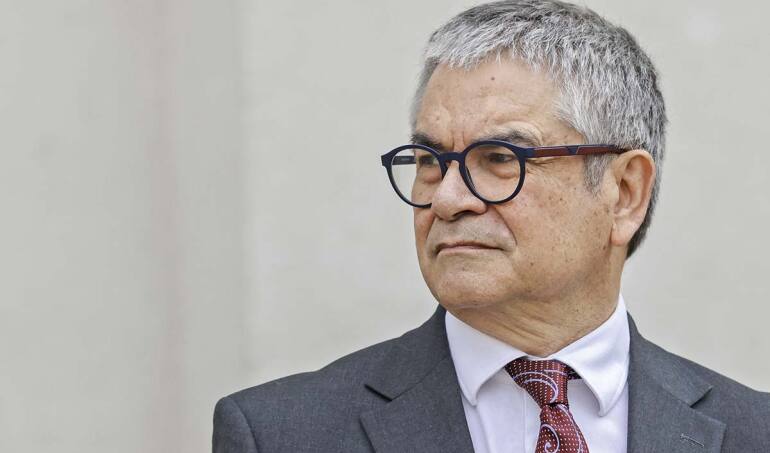
Former Minister Mario Marcel questions the controversy raised by the current head of Finance under Kast regarding the "fiscal box. " "No one evaluates a company by its cash. " April 2, 2026 Former Finance Minister Mario Marcel addressed the discussion surrounding the so-called "fiscal box," one of the most debated points in the early days of the new administration.
It all began when the current Minister of Finance, Jorge Quiroz, claimed that President Kast's government inherited a state "without cash," with only about US$46. 28 million in other public treasury assets at the end of December 2025. However, Nicolás Grau later countered this by stating that the figure rose to US$1.
406 billion by the end of January. According to the latest report from the Budget Office (Dipres), the figure increased to US$3. 617 billion by February.
In this context, where Quiroz accused that spending was restrained at the end of last year to be carried over to the beginning of 2026, Mario Marcel referred on Radio Pauta to the statements made by economist José de Gregorio, commenting that this is "a completely irrelevant discussion. " Therefore, Marcel emphasized: "If we are going to talk about public finances, let's talk about the budget, not about cash, just as no one evaluates a company by the cash it has because, moreover, if a company has a lot of cash, it has a lot of money in the checking account, it is losing money. " Continuing on this topic, former Minister Marcel stated that for the 2026 Budget, approximately US$18 billion in debt was authorized, which has not been fully issued "because it does not need and it is not convenient to have all that money sitting in cash.
It issues gradually as needed. " He also emphasized that countries that worry about their "fiscal box" are those that "do not have access to the global capital markets," which is not the case for Chile. "Chile has a good credit rating, has investment grade, an authorization for borrowing, and based on that, it manages its cash," he concluded on Radio Pauta.