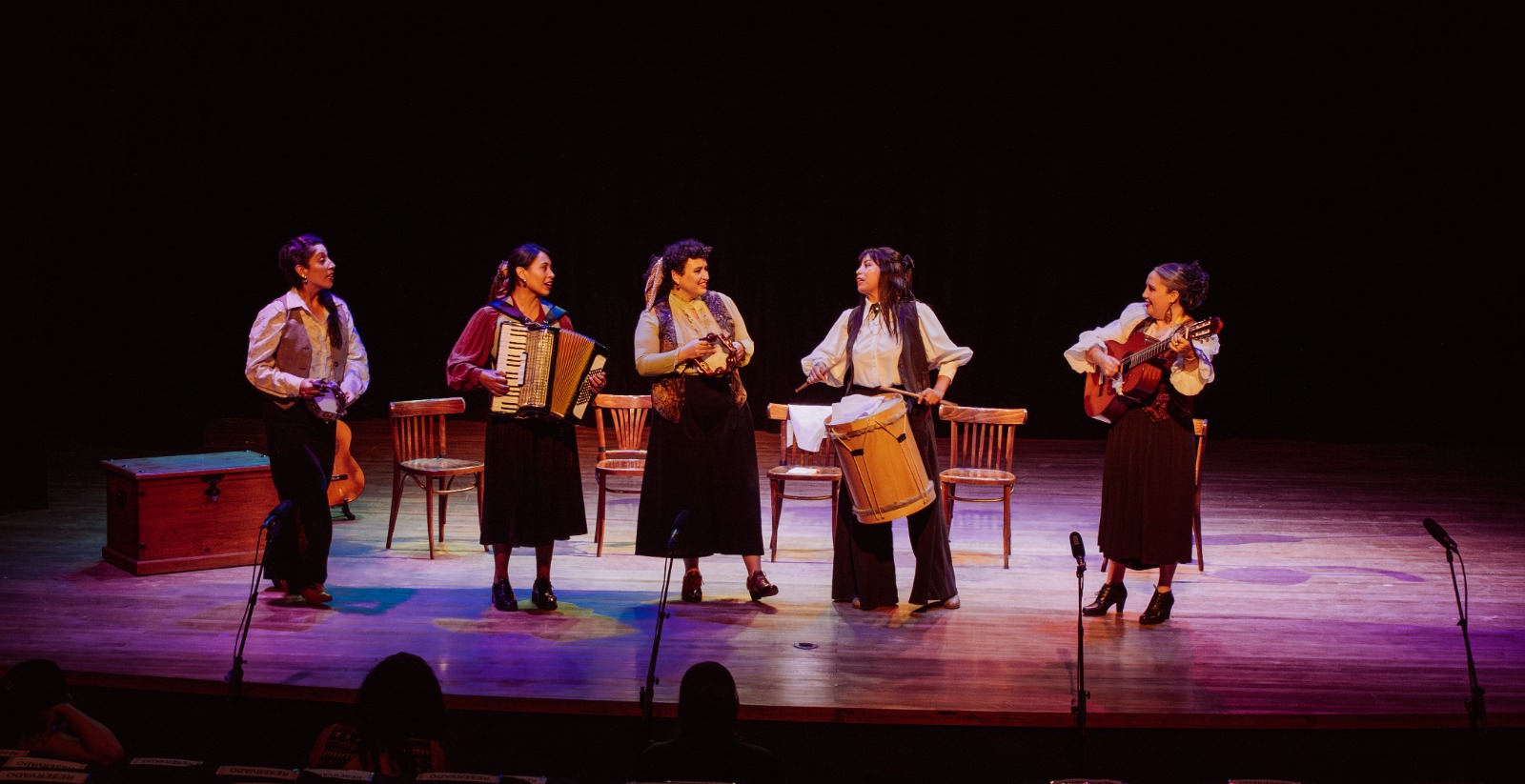
By Carolina Fernández-Niño Morales, Cuecas All Year Round. The wordplay “singers of tonadas” with “explosive singers” fits perfectly to describe the spark that spontaneously ignited in July 2025 and literally exploded with the staging of “The Echo of the Singer” on March 19, 2026, at Casona Dubois. The beginning of this story dates back to the winter two years ago—around the commemoration of the “Day of the Cuequero and Cuequera”—when a group of eight singers unexpectedly met face to face at La Picá de la Yasna: a renowned territory of national music, especially for the folk scene.
At that moment, more than ever, they recognized themselves as women singers, all excluded from the celebration of the anniversary that brings together the cueca-loving public. Indeed, the eight recognized that they had not been invited to any of the cueca events—neither they nor their respective female groups, despite the presence of some singers from Las Niñas, Las Primas, Las Corraleras, and the now soloists from what was the duo El Parcito. There was no talk of parity.
There was no recognition of their careers or visibility of their work. It is worth mentioning that “the ones from the video” are all singers who possess as much experience and professionalism as the men who were invited to perform at the commemorative cuecazos for the birth of Nano Núñez. But before the rooster crowed, this group of women already had ideas everywhere since their stories, experiences, admirations, struggles, and projections shared several common points.
Thus, during the following summer, the ideas of these cueca and tonada singers began to take shape, eventually branding themselves as “explosive singers. ” The group added one more woman, a woman from the world of historiography, but as much a bearer of the arts of both ancient and contemporary women artists as her companions. Her name: Araucaria Rojas.
Literally, in no time, the ideas materialized into a staging that quickly linked singing with theater and history; all o…
Of course, it is no surprise, as this production balanced all emotions in its singing, elevating both the most prominent and the most silenced female voices from the historical and contemporary repertoire of national folklore. Why March? Perhaps the obvious reason is that it is the month when the women’s demands of March 8 are commemorated, but perhaps less known is the anniversary of March 14: “National Day of the Chilean Singer.
” A date we hope continues to be disseminated, just as we hope the echo of the explosive singers will continue to spread, which has already taken flight and we believe no one can stop.