Long lines at gas stations that formed prior to the fuel price increase - which took effect this Thursday - were just a reflection of the chain of effects this scenario will have on citizens. This measure is supported by two factors: on one hand, the war in the Middle East, and on the other, the decision of President José Antonio Kast's government to modify, through administrative means, the Fuel Price Stabilization Mechanism (Mepco), due to the fiscal constraints identified. As a result, gasoline prices rose by 370 pesos per liter, and diesel by 580 pesos, which will mean an additional monthly expense of between 25% and 30%.
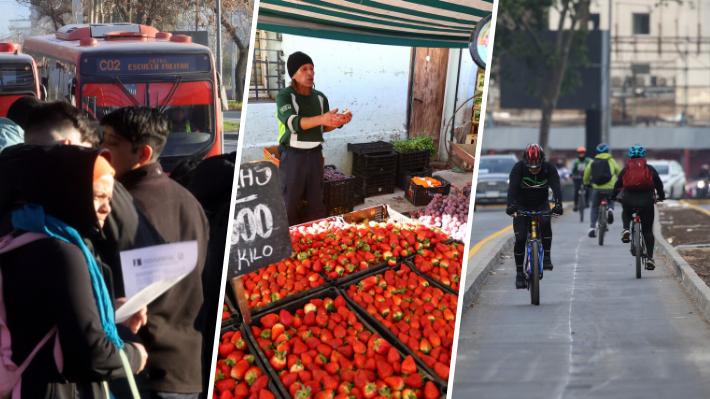
These increases are accompanied by a package of measures currently under review by Congress, including a 100,000 pesos bonus for taxis and shared transport, and according to government officials, the price of the Red bus system will not increase. However, the cost of fuels affects various sectors and areas of the essential goods distribution chain. This will lead people to make some changes in their spending and routines to compensate for the effects of the increase in areas such as the cost of bread, fruits, intercity bus fares, and opting to leave their cars at home, among others.
"Product prices could rise by around 15% starting in April, so most people will see a direct impact, obviously on fuel, but also on food, since the first impact goes directly to the food distribution chain," comments Jorge Berríos, Academic Director of the Finance Diploma at Unegocios FEN, University of Chile. The expert adds that "additionally, we will have an extra 1. 5% inflation impact on top of the already projected 3.
5%, distributed over April, May, and June. If this occurs, we will have a very strong impact on the UF, which affects all account payments, such as insurance, mortgage payments, school fees, etc. ," so the general projection is that starting in April, overall consumption expenses will rise by around 20%.
In the tourism sector, for example, a complex scenario is already anticipated for Holy Week, with a projected 25% drop i…
The Cadem survey - published on Wednesday - showed that 85% of respondents believe the increase will affect them "a lot or quite a bit," while 10% said "somewhat. " Only 4% responded that it would affect them "little or not at all. " Regarding personal measures to be taken due to the increase, 66% said they would "spend less on other things" to cover the increase; 61% said they would "face severe economic difficulties"; 57% said they would "be forced to stop using their car and use public transport"; and 48% said they would "stop buying kerosene for heating.
" Meanwhile, the Panel Ciudadano-UDD survey, also published on Wednesday, showed that the main concern regarding the fuel price increase is: rising transportation, food, and other prices (62%); the impact on household budgets (27%); the impact on those who depend on their vehicle (7%); and the cost to the state's fiscal accounts (2%). Impact on Transportation Decisions In conversation with Emol, experts project the impacts that individuals may face regarding transportation and their commutes, which includes measures such as rationing car use or even carpooling. Jorge Berríos discusses the scenario regarding people's mobility.
In his view, there will not be an "immediate change," as "mobility habits depend greatly on work locations, how people arrive, and the mode of transport they use. " However, he anticipates that "most people will begin to change their habits as they feel the impact and cannot afford the increase in fuel costs. " While he emphasizes that the impact on public transport should not occur, there are more effects for those who use cars.
"In situations where there is a significant increase in fuel prices, there is logically an expectation of decreased car use and a shift to other modes of transport," he specified. Juan Paulo Marchant, an academic at the School of Psychology at Universidad Bernardo O'Higgins (UBO), adds that in response to the fuel price increase, people may be planning and rationing their car use. "In this sense, they start to include options they previously did for pleasure or distraction, but today it is more about the necessity to save: walking longer distances instead of using the car or biking if they consider it safe.
Thus, they leave the vehicle for occasions that are urgent or justify its use," he adds. He warns, however, that the problem lies with those who need to travel long distances and public transport is not an option, either because schedules do not align or frequency is low. "In those cases, the trend is to share vehicles among neighbors and acquaintances, which strengthens community ties," he emphasizes.
Cristian Rodríguez, a sociologist at the University of Los Andes, offers another perspective. He believes it is challenging for people to decide to replace car trips, especially for those who commute to work by car, "because this would mean getting up an hour earlier to take the bus, which is difficult to reconcile with other commitments. " Travel Decisions Regarding travel, experts anticipate that people will begin to moderate their decisions due to the impact of increased fares for intercity buses or air tickets.
For Berríos, there should not be a significant impact on travel "because people plan these activities in advance. " "What is affected is the wallet and the cost that people pay for travel. " Vicente Corona, Senior Analyst at BDO Chile, suggests that the increase in gasoline prices should lead to a moderation in travel, "not only through private vehicles but also through other means such as buses or planes, due to the increase in fares.
" "At the same time, this may translate into a shift towards closer destinations, which also has economic implications for the tourism sector," he noted. Impact on Consumption The increase in fuel prices could affect other consumption decisions due to rising costs in other areas that impact daily consumption. Corona elaborates that "the rise in fuel prices acts as an indirect tax on consumption, through the inflation it generates, and reduces the disposable income of households for more recreational activities such as dining out, tourism, and spontaneous purchases.
" Ultimately, the expert projects that from an economic standpoint, there is a beginning of "a reassignment of expenses within the household, where the higher cost of mobility forces cuts in other consumptions, especially those that are non-essential. " For Rodríguez, in these scenarios, people "tend to cut what they think is superfluous and will impact the budget more, but that is not necessarily the case. For example, they might choose to buy a cheaper soap or replace soda with juice, thinking that this reduces their consumption level, but those types of differences are rather marginal.
Often, that reflects more a need to feel like they are doing something. " Nonetheless, he does not rule out other decisions such as "canceling subscriptions to streaming platforms, stopping donations to foundations, or reducing the hiring of electrical or other services and opting to do it themselves. There could also be declines in nightlife for those who choose to maintain their subscriptions but reduce outings to the cinema.